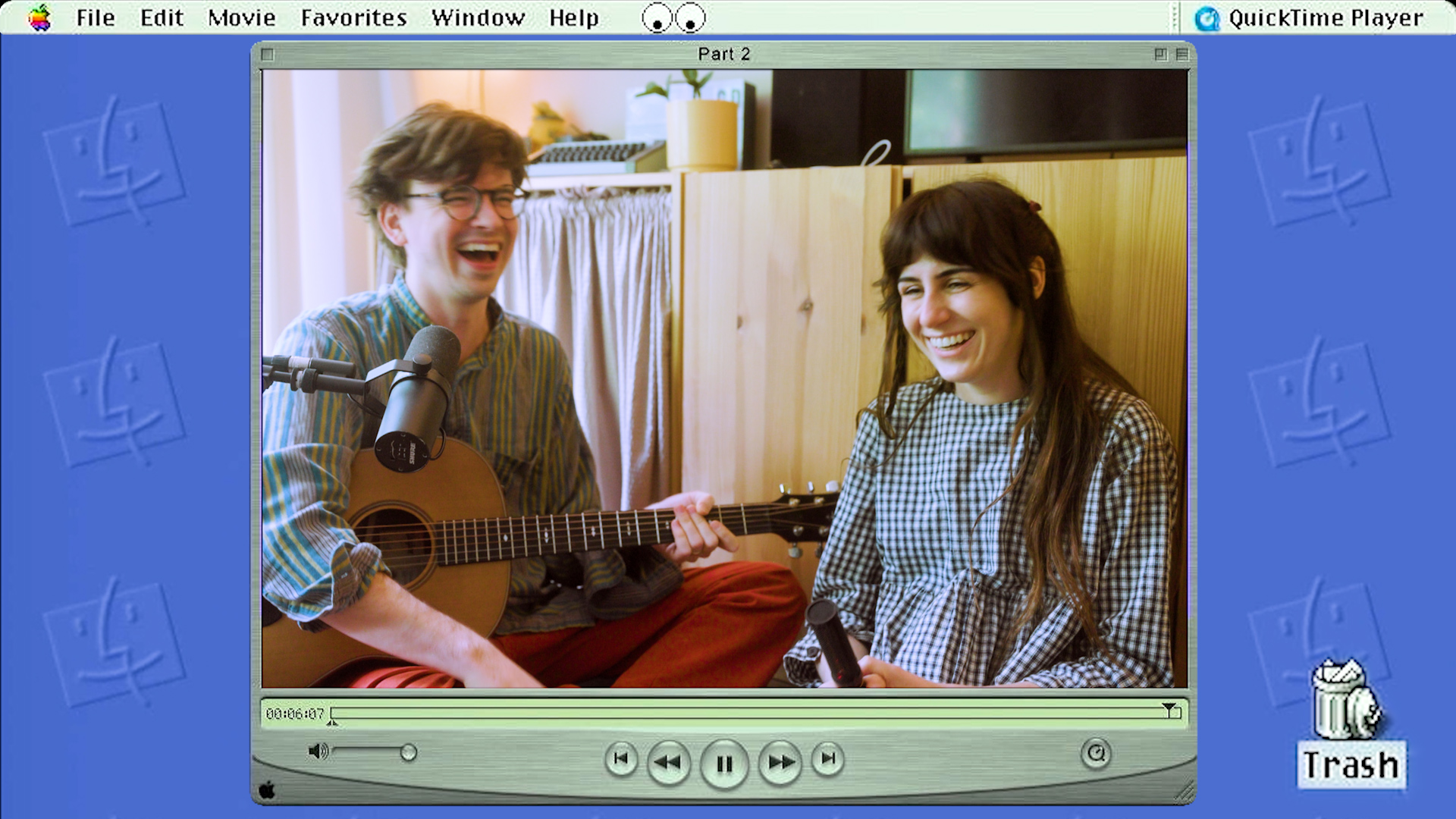
Season Two of Josh Turner’s YouTube series Among Friends opens with a simple premise: what if the internet still felt social?
After nearly two decades on YouTube, the singer-songwriter, arranger and multi-instrumentalist has built a devoted audience through thoughtful arrangements, eclectic collaborations and an approach that values connection over visibility.
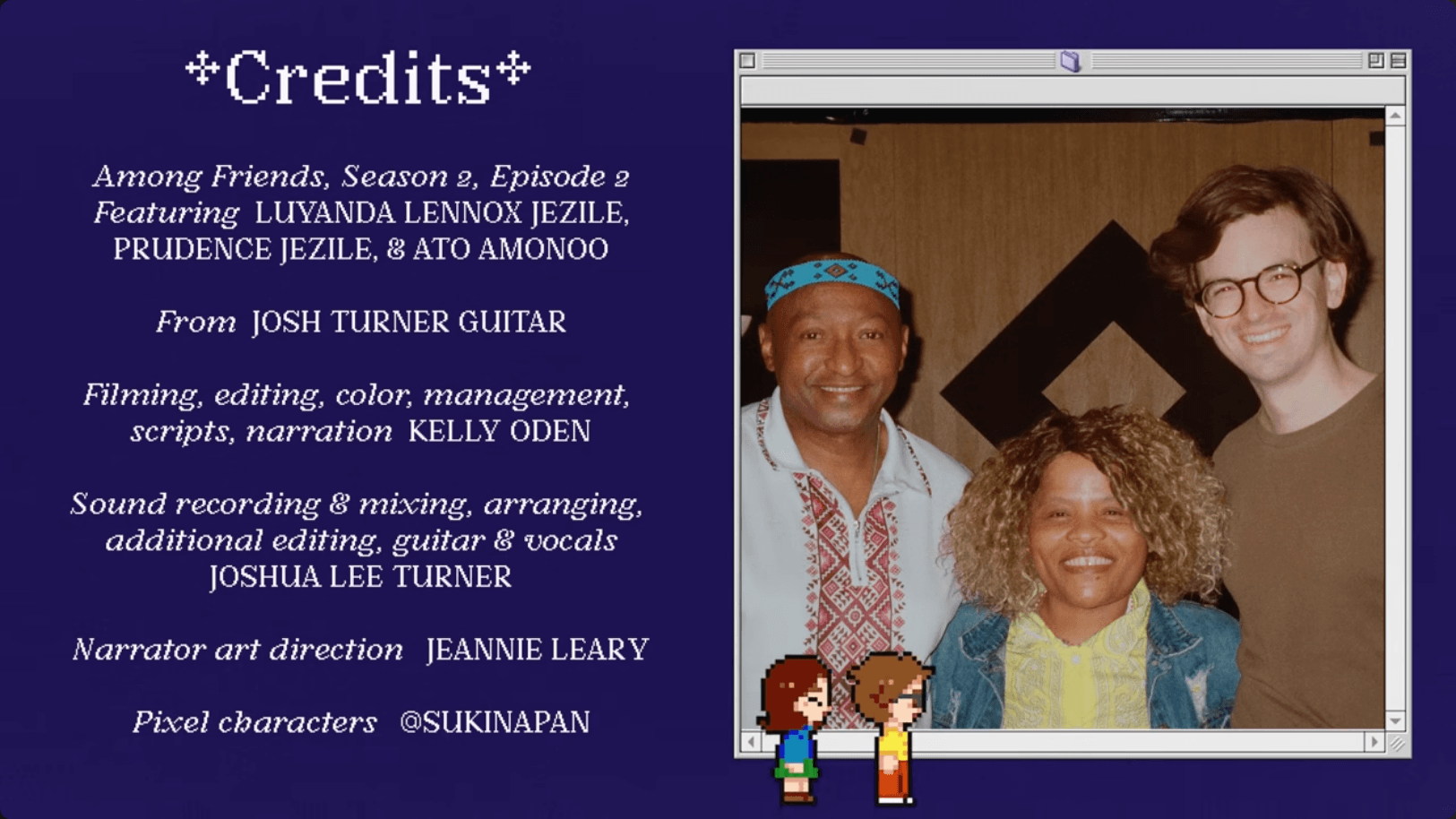
That philosophy sits at the center of Among Friends, Turner’s lovingly handcrafted musical travelogue series. Part performance series, part road trip and part meditation on friendship, it follows Turner and his wife, filmmaker and series co-creator and narrator Kelly Oden, as they travel to meet musical collaborators in person — many of whom first connected through the internet.
In the season’s intro sequence, Oden emerges from a periwinkle haze. Speaking in the measured cadence of a forgotten VHS tape, she recalls the internet’s idealistic early promise as a place of connection: “Imagine a world where the online superhighway we call the Web is a global system that amplifies only the best qualities of human beings.”
Then she contrasts it with today’s online world.
“We are at once more connected than ever before via the internet and so-called social media,” she says. “But far less connected to our basic shared humanity.
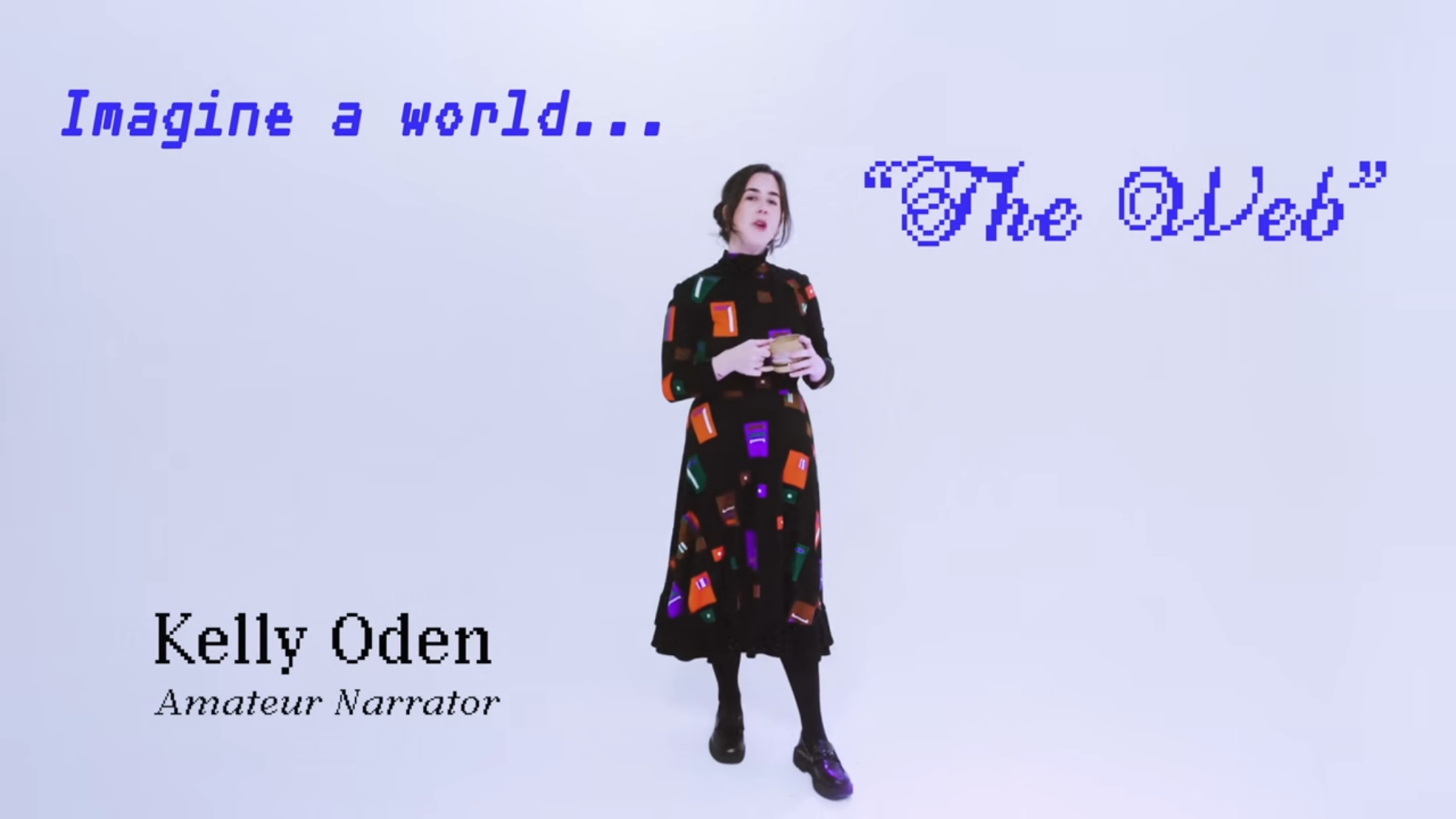
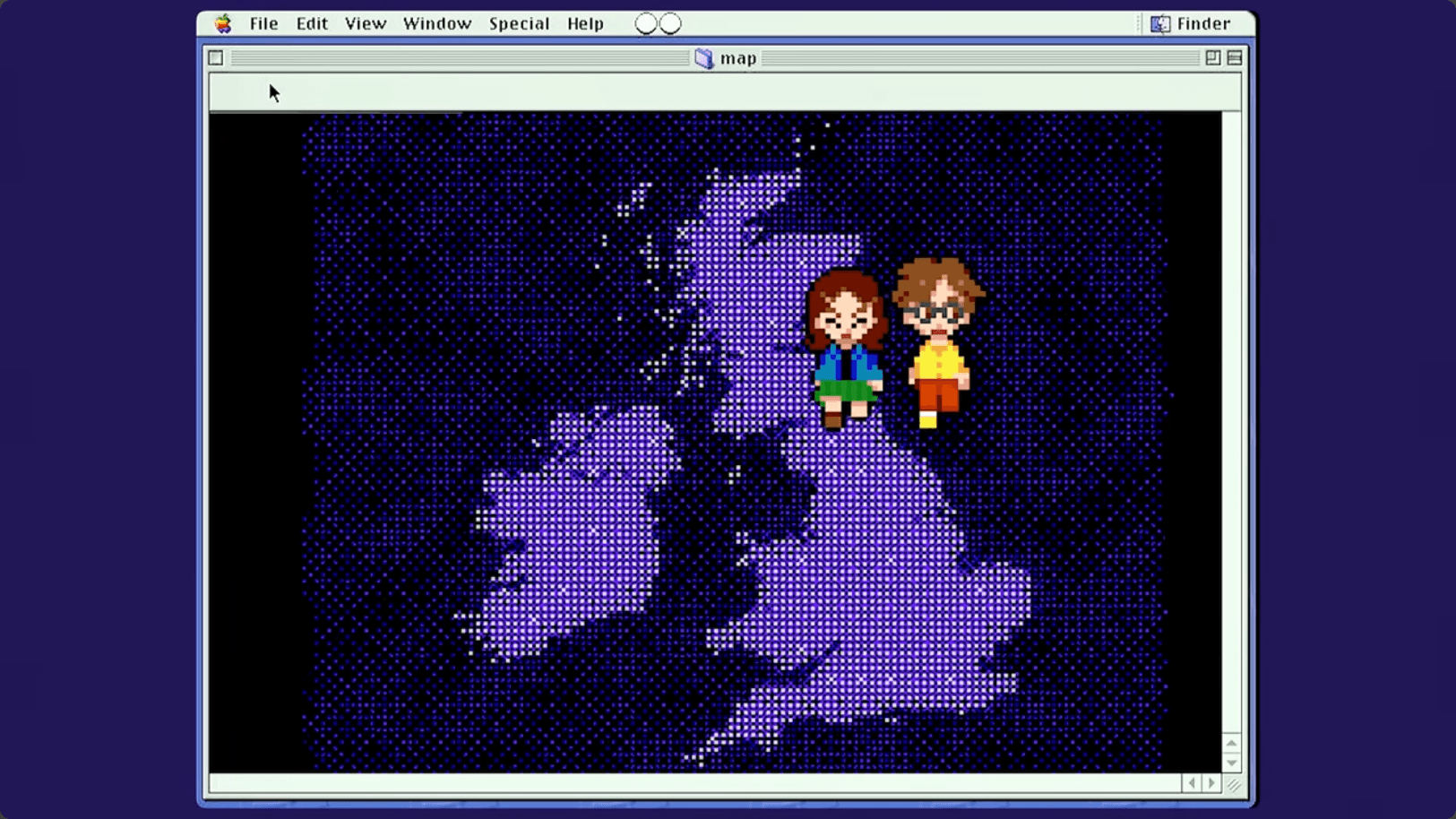
“We invite you to slow down,” she adds, “and come on an extraordinarily impractical money-losing adventure as we leave our digital confines to go be among friends.”
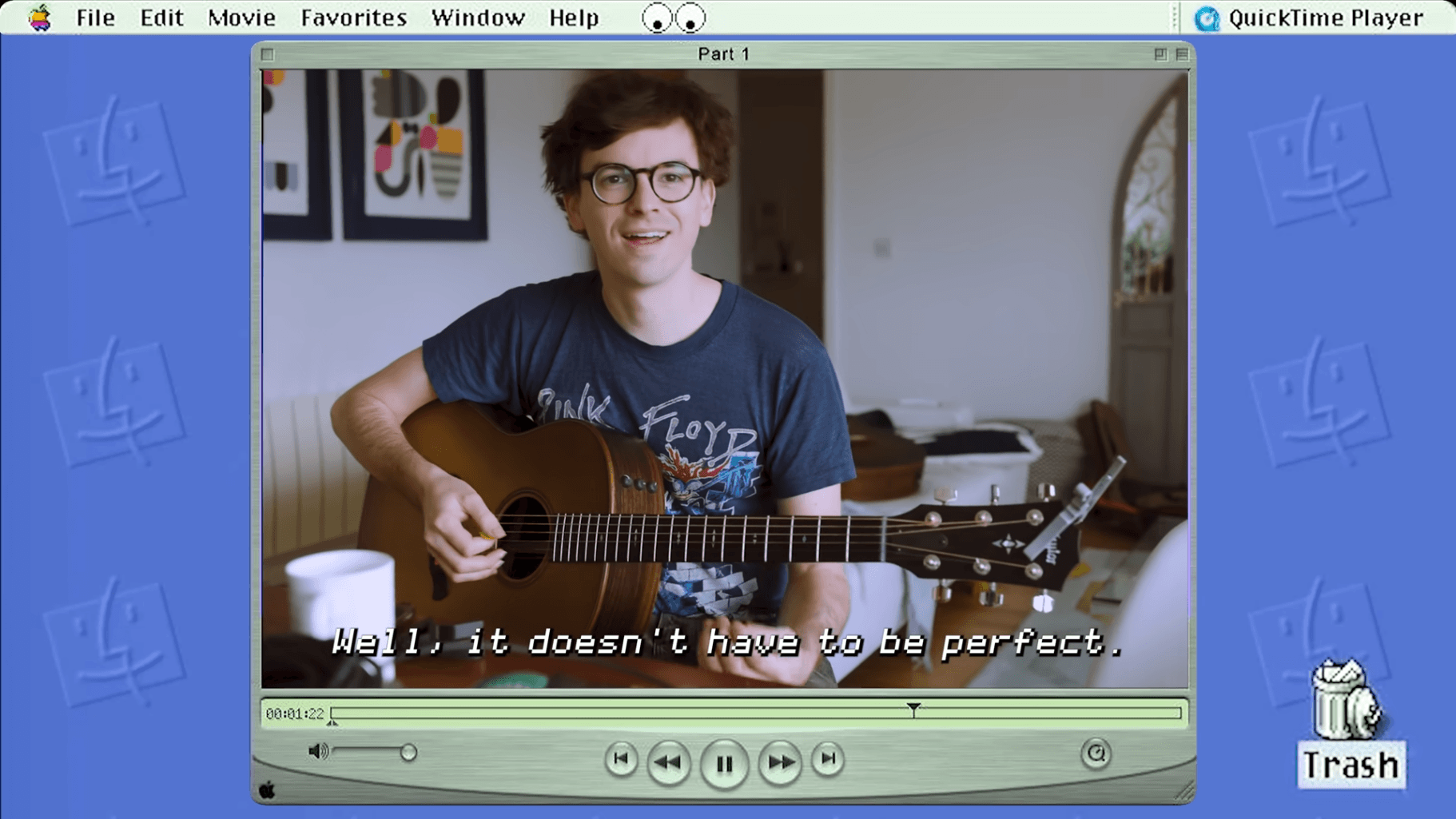
The retro aesthetic threaded through Among Friends is not a plug-in or post-production trick. Turner and Oden built the visual language of the series from the inside out.
“We actually bought a Power Mac G4,” Turner says with a laugh from his Brooklyn apartment. “The whole series from top to bottom is sort of like ‘neurotically do it the hard way.’ Doing it the hard way is fun. That’s the point of this.”
Turner delights in the logistical puzzles presented by the series format. “We’re out in the middle of a park in Denver and there’s no power,” he offers as an example. “But I want this to sound as good as if it was in a studio basically and still be all live and have no overdubbing. Figuring all that out is a big part of the fun for me.”
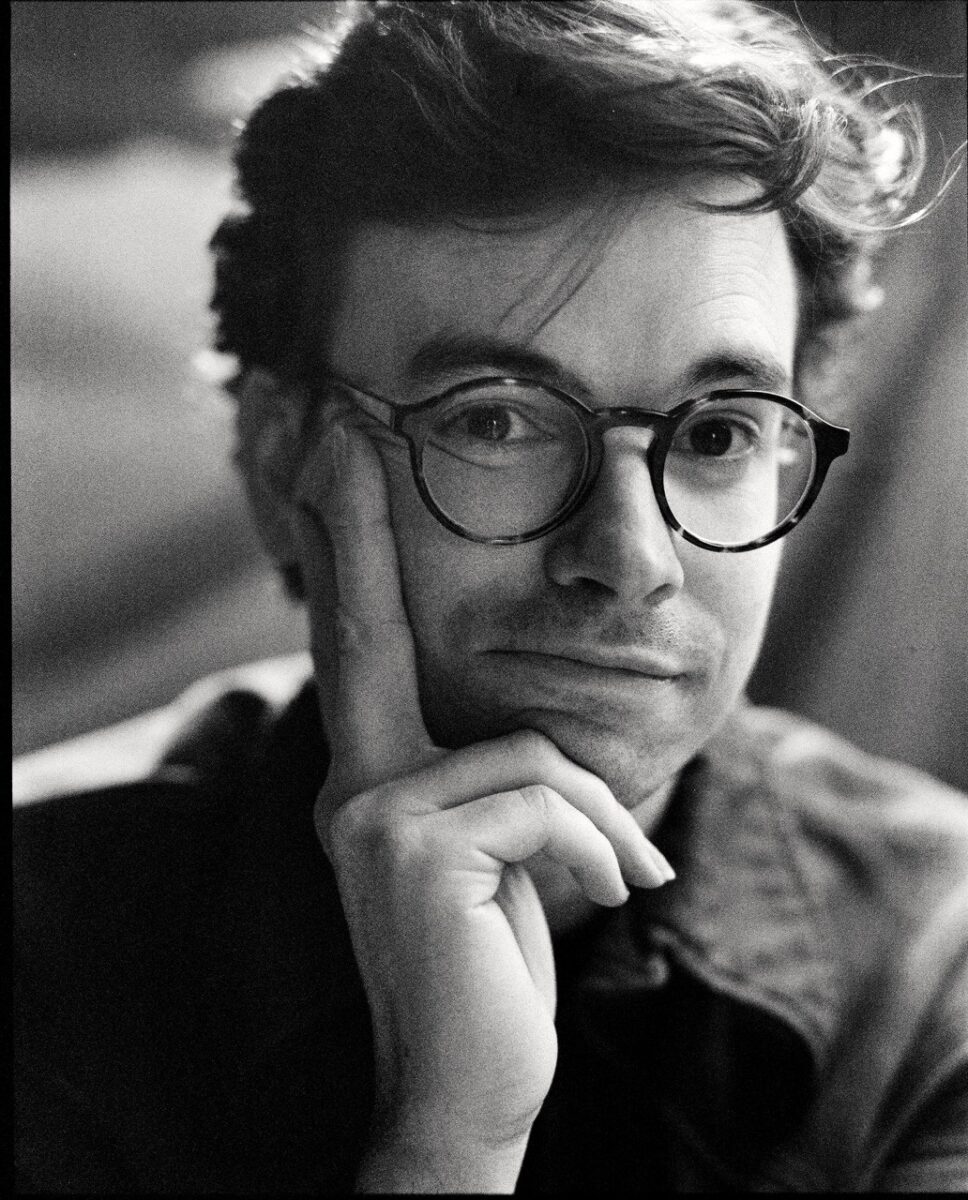
He started posting videos to his Josh Turner Guitar channel on YouTube in 2007 at age fifteen after moving to a new city. At the time, there was no thought of it being a money-making strategy. It was a social space.
The way I always described collaboration is like the difference between giving a monologue and having a conversation.”
“We would bond over music that we both loved and then tried to nail a take of it,” Turner says. “The sense of connectedness that I found is something I’ve been chasing ever since. This series is about returning to that spirit, saying, ‘I don’t care what the algorithm wants to hear. These are the songs I want to play, and these are the people that I want to play them with.’”
The roots of that collaborative instinct stretch back to his childhood.
Born in Indianapolis, Turner mostly grew up in Cincinnati. His father’s job had the family moving around from time to time, though he was surrounded by music from a young age.
“My grandparents were both church musicians,” Turner says. “My grandpa was a choir conductor and my grandma was the organist at the church. My dad also played guitar: Simon & Garfunkel, Beatles, Crosby, Stills & Nash. He was way into all that. He would, when I was falling asleep, sing me some soft, folky type stuff.”
Turner started singing at age nine. Soon after, he learned piano and picked up guitar at thirteen.
Music as Conversation
Over the years, Turner’s videos have developed a reputation for musical intelligence, thoughtful arrangements and eclectic collaborations.
“The way that I always described collaboration,” he says, “is like the difference between giving a monologue and having a conversation. When it’s just me, it has to be perfect. But as soon as I’m with another person, I stop worrying about that. I’m just like, ‘Am I being musically sensitive to what they’re doing?’”
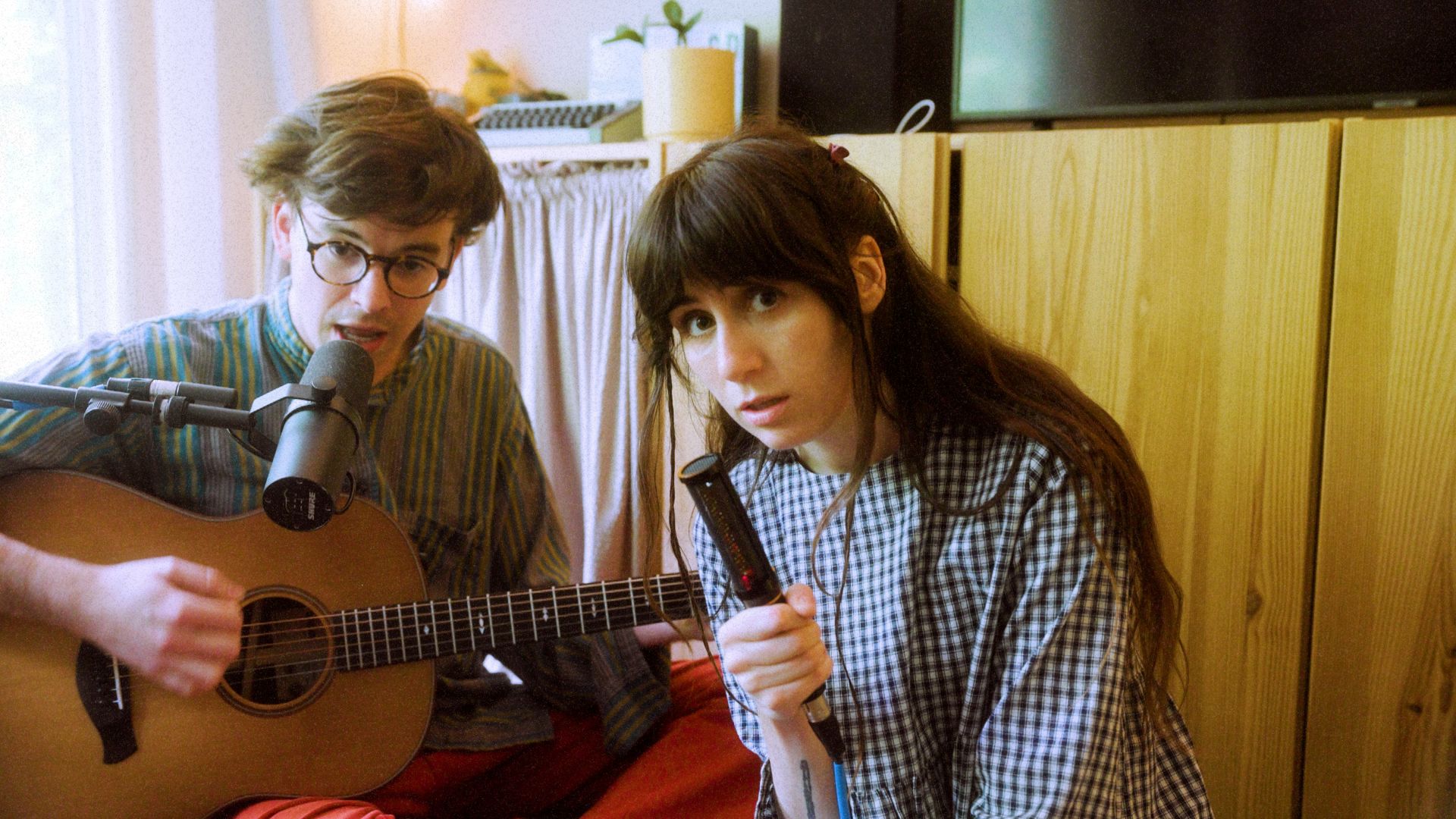
The first episode of Season Two of Among Friends centers on a stripped-down arrangement of Electric Light Orchestra’s “Turn to Stone,” to be performed with English singer-songwriter dodie.
Turner has only two days to learn and arrange the song before filming.
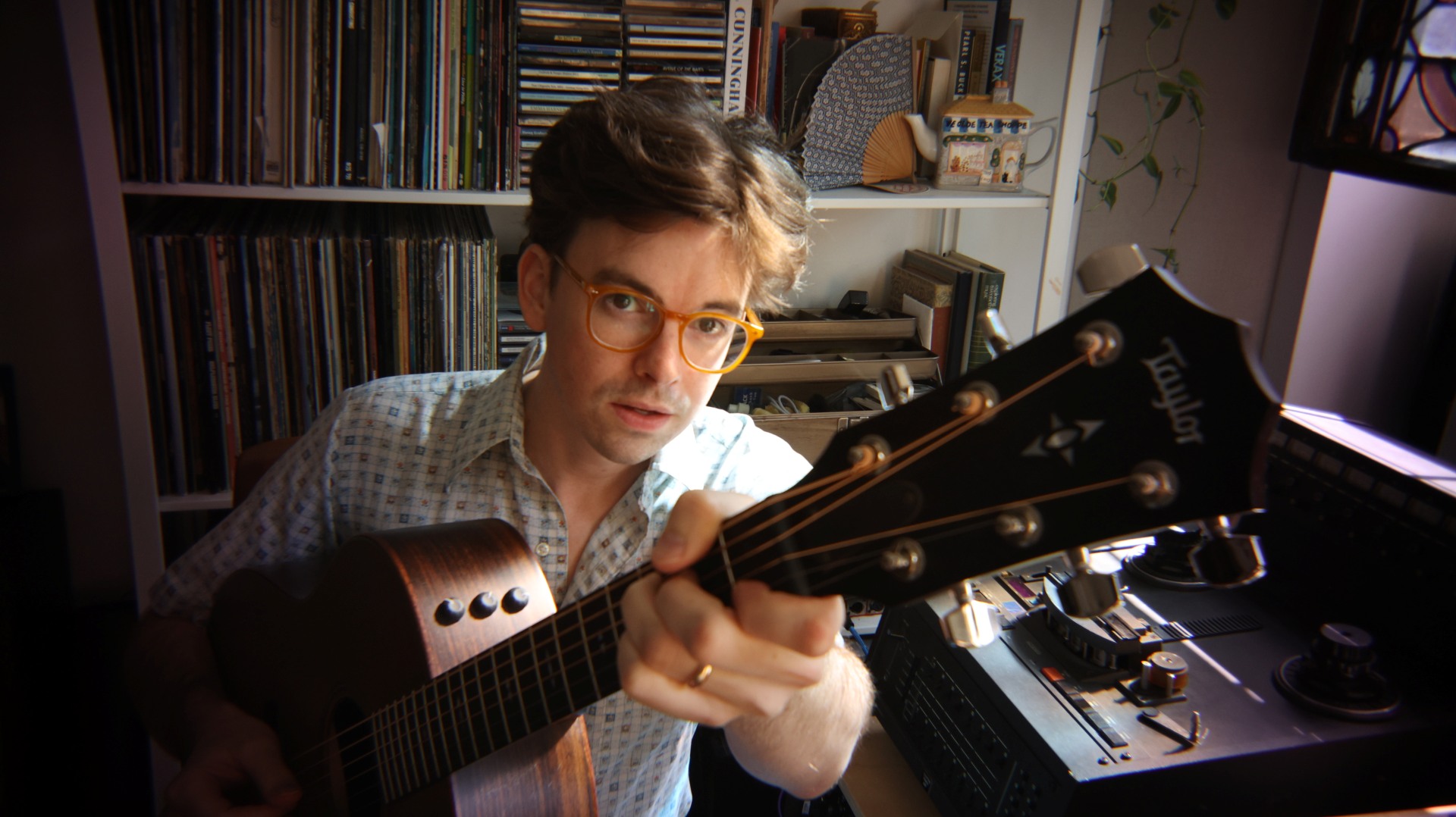
“It’s deceptively hard,” he says while working through the arrangement with an arm slung over his Taylor Builder’s Edition 717e. “I may need to leave some of these licks out because I’m not sure I can sell it with all of the hot licks.”
Turner’s love of collaboration predates his YouTube success entirely, having shaped nearly every stage of his musical life. His first major musical partner was Carson McKee. They met at an eighth-grade talent show in North Carolina.
“He was singing and playing guitar,” Turner recalls. “He was doing a Howie Day song or something like that. It was clear that out of all the people that performed there, he and I were the most sort of musically aligned.”
Soon the two were jamming together, eventually forming the bluegrass trio The Other Favorites. “We played together all through high school,” Turner says, ”and made a lot of videos together on the channel.”
The first major YouTube breakthrough came with a cover of “Wagon Wheel,” filmed with McKee in front of a weathered shed years before the song became a singalong staple.
“We were both like fifteen,” Turner says. “It really had a very old-timey look to the video. It was on a little point-and-shoot camera.”
The video spread.
While attending Butler University, Turner’s solo acoustic arrangement of Dire Straits’ “Sultans of Swing” unexpectedly exploded after reaching Reddit’s front page in 2012.
“It got 100,000 views in a day,” Turner says. “That changed the growth of my channel from being linear to being more exponential.”
The more revealing milestone may have been a collaborative video he assembled after reaching a major channel benchmark in 2015. Turner invited every collaborator who had appeared on his channel to contribute recordings for a sprawling cover of The Band’s “The Weight.” Musicians sent in clips from different locations, and Turner stitched them together into a communal performance involving roughly 50 people.
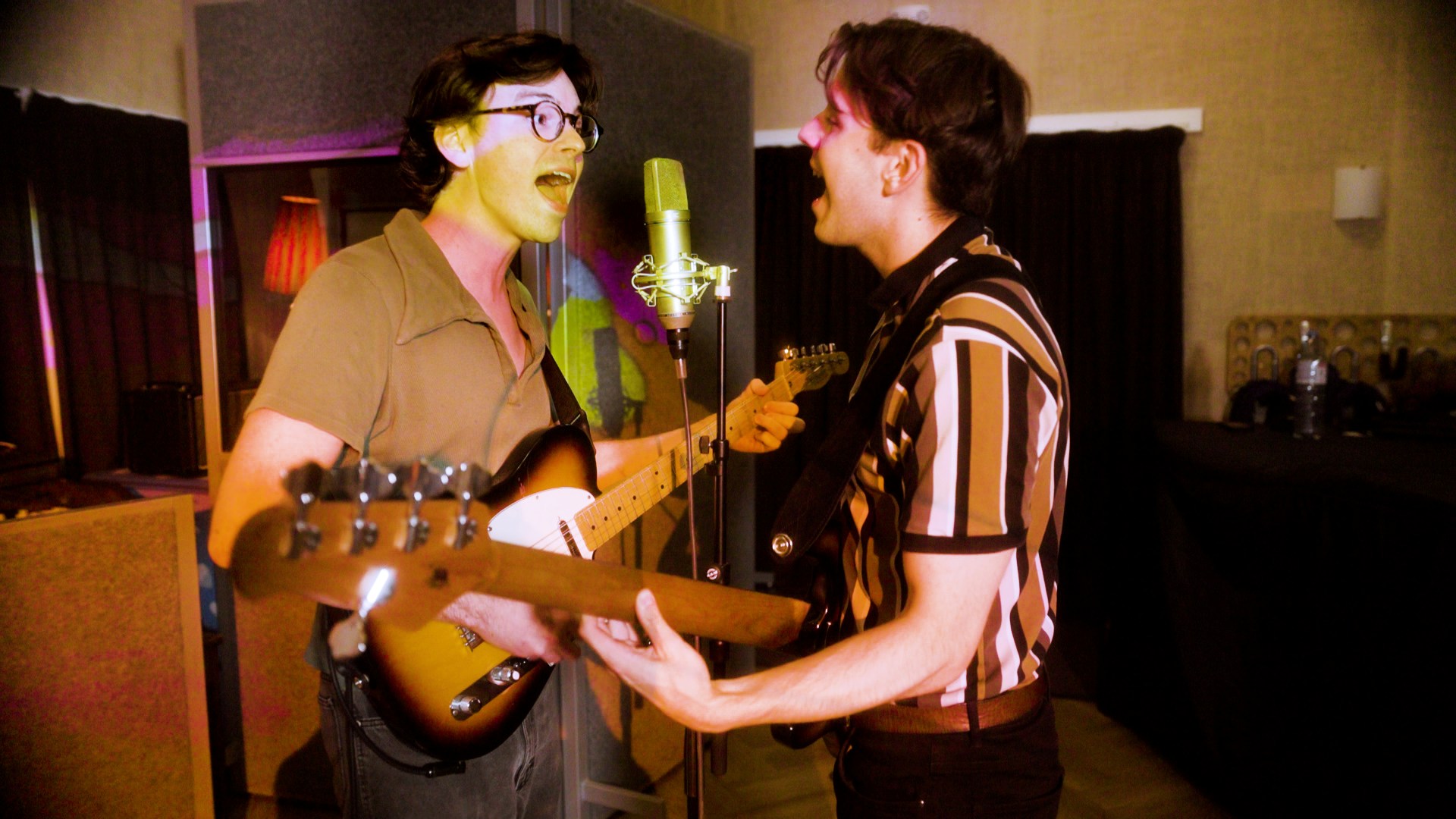
A self-arranged cover of Paul Simon’s “Graceland” performed on his Telecaster eventually led to Turner appearing on Good Morning America, becoming a touring cast member in the concert-style theatrical production The Simon & Garfunkel Story, and starring in the production Graceland Live in 2019.
Doors opened. With each new arrangement and video upload, a career materialized almost accidentally around him.
But even as his audience expanded, Turner’s philosophy toward making videos remained deliberately modest in scope.
“At the time,” Turner says, “YouTube was a reason to hang out with other musicians. It was, ‘Hey, you’re a great musician. Why don’t we get together and make a video?’ Especially back then, there was no ‘Let me grow my audience. Let me make more money.’ YouTube was just a playground for me essentially. It was a reason to hang out with other musicians and to share that feeling of togetherness.”
New Friends: From Online to IRL
The collaborative spirit that runs through Among Friends has shaped much of Turner’s career, often in unexpected ways.
“The reason I got connected with Taylor was because Bob Taylor was a fan of my YouTube channel,” Turner says. “He had emailed me years ago sort of apropos of nothing, just saying, ‘Hey, big fan of the channel. Love what you’re doing.’ That was it.
“I remember being impressed that a person with so much influence in the guitar world wasn’t trying to be salesy. He wasn’t like, ‘Love to get a Taylor in your hands.’ It was so classy.”
Turner was already familiar with Taylor Guitars. His father owned an 810ce LTD dreadnought with Brazilian rosewood back and sides, and Turner had long admired the Leo Kottke Signature Model. He says Kottke had a “huge early influence” on him.
A few years later, while touring through San Diego with The Bygones, Turner visited the Taylor factory in El Cajon, where Bob personally gave him a tour.
At the time, Turner had his eye on the Builder’s Edition 717e after having spent time with Taylor’s early Grand Pacific round-shoulder dreadnought models.
What surprised him was not the craftsmanship. It was the voice.
“I had played one at a Guitar Center in Manhattan,” he says, “and the voicing of it was just so different from what I tend to associate with Taylors. I love vintage instruments. You see me play a handful of them on my channel and they just tend to be darker sounding and drier and more fundamental-heavy with less overtone content. That to me is the way that acoustic guitar should sound. This was the first Taylor that I had played where I was like, ‘Whoa, that’s the sound.’ It sounds like all these old recordings that I love.”
The sense of connectedness that I found is something I’ve been chasing ever since.
The guitar also offered the feel and performance that have long distinguished the Taylor playing experience.
“Unlike an actual vintage instrument, the neck is straight,” he says. “The playability is excellent, the intonation is good all the way up the neck, and it has a nice pickup system already installed. I don’t consciously think of it as having superior playability to my other instruments, and yet I reach for it probably the most often of any of my guitars right now…What I like about the neck is that it’s actually kind of substantial, but it still feels fast and comfortable.”
Turner is not a gear maximalist. He does not cycle through instruments for novelty. He is deeply attached to familiarity, routine and tools that quietly become extensions of his musical thinking.
The Builder’s Edition 717e fits in naturally along his longtime favorites.
“My Martin OOO was my first guitar, and I’ve just kept it for 20 years,” he says. “My Telecaster was my first electric guitar. It was made in Mexico. I’ve never even had it set up.” He pauses. “It probably needs new frets by this point.”
A baritone singer, Turner found the Builder’s Edition model has a frequency response that works with him instead of against him.
“There’s always a fight when I record myself singing and playing at the same time because it’s the same frequency space,” he says. “This guitar — it’s like there’s a neat little scoop that’s already built into those low mids where my voice sits when I’m playing it.”
Turner talks about his favorite guitars the way he talks about collaborators. They’re responsive and cooperative. They make room and share space with the people holding them.
Beyond the Algorithm
When Turner and Oden began conceptualizing the first season of Among Friends following the pandemic lockdown era, the emotional impulse behind it was strikingly simple.
“The thing that everybody wanted to do by the time the pandemic was starting to ease up was to travel and be with people,” Turner recalls. “The first Among Friends really was just a pretense to do that. To go catch up with old musical friends who had been on the channel in the past and make this big epic road trip across the U.S. with our newfound freedom.”
When asked what advice he would give to a young musician trying to build a career online today, Josh Turner doesn’t offer a growth strategy. He offers a warning.
“The minute that you’re making something because you think it’s gonna gain views or hit big on the algorithm,” he says, “the minute that you’re being motivated by that, is the first step down the path to burnout.”
For someone who has spent nearly two decades posting musical performance videos online, the answer is surprisingly simple: “You have to make things that you like making. The algorithm just wants you to do the same thing again and again. Once something does really well, it dangles this carrot: ‘Just do that again, do that again, do that again.’ “You have to draw a line somewhere.”
It all traces back to how he felt when he was making videos with his teenage friends and sharing them online.
“The sense of connectedness that I found is something that I’ve been chasing ever since,” says Turner.
Nearly twenty years later, he is still chasing it. Not view counts. Not virality. Just the feeling that music can still start a conversation — and bring people a little closer together.