Dream Machines

Scroll Down

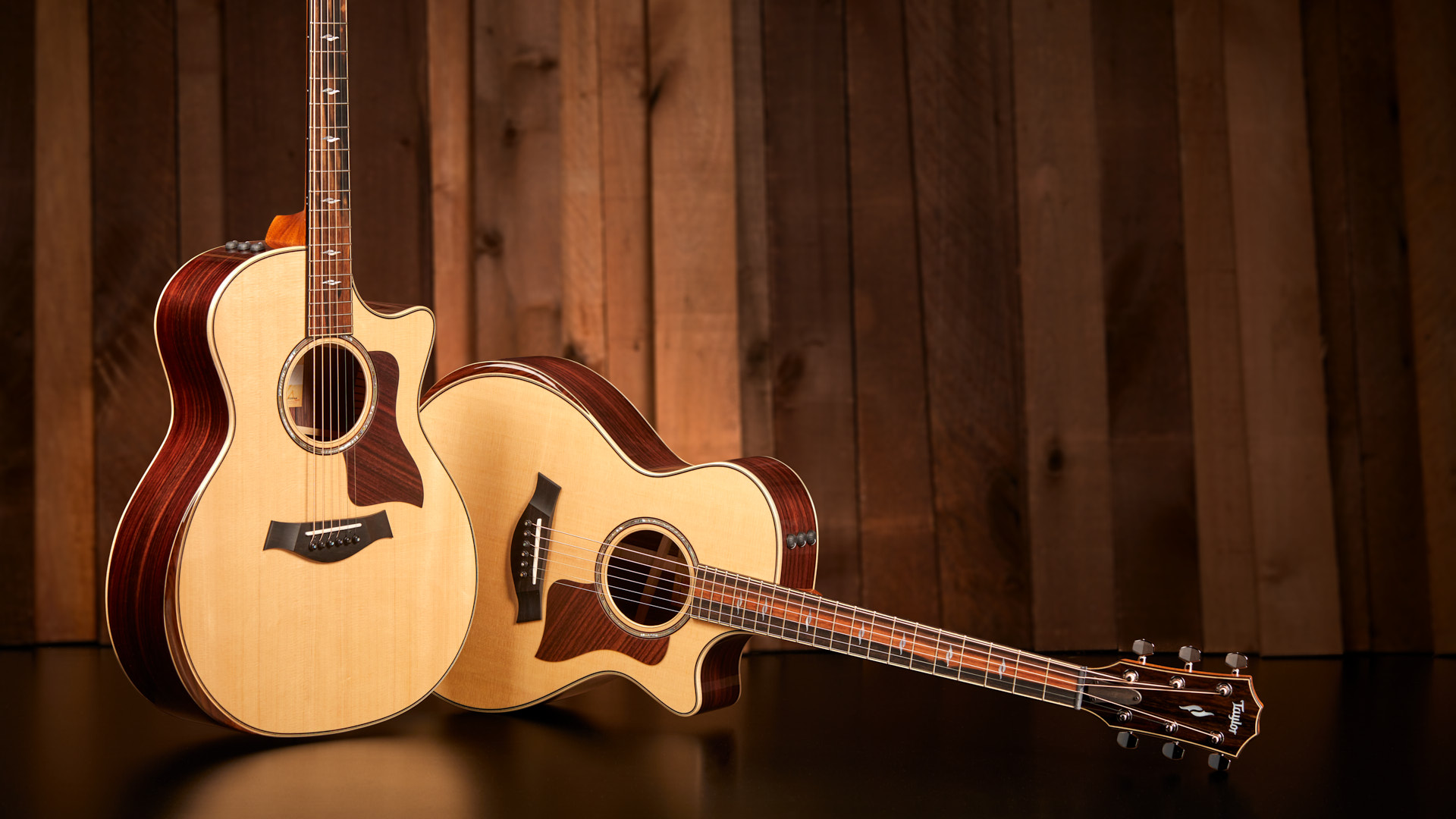
Born from adversity, our new American Dream series was designed to respond to our fundamental need for musical expression.

Each of us probably has our own clear memory of when the COVID pandemic officially flipped the switch on normal life. At Taylor, we’d been tracking its global progression like a slow-moving weather front, and on March 18, we temporarily suspended guitar production at our California campus, not knowing when we would be able to reopen.

For master builder Andy Powers, the stark, far-reaching reality of the situation hit home from another perspective when he woke up one morning around that time and scrolled through text messages from musician friends from all around the world.

“I realized every single one of my musician friends was now unemployed,” he says. “Everyone’s tour, everyone’s show, their crew, the backline, the bus driver. Even the local restaurant and coffee shop gigs were cancelled. The entire live music world had just changed.”

As people everywhere began to reckon with the uncertainties ahead, Andy sensed that despite the massive disruption of life as we knew it, and more specifically, the music industry, playing music would become more important to people than ever. And not just for the working musicians of the world, but for recreational players and anyone in need of an outlet to express themselves, especially in a time of social distancing when people were taking time to evaluate what was important to them in life.

Andy remembers thinking about what people might need — and what Taylor as a company might need to make — one morning when he came to the factory after production had been halted.

“It’s bizarre to walk around a factory that’s completely shut down,” he recalls. “The lights are turned off, there’s nobody here, guitars are sitting in racks awaiting our crew to come back.”

And when our California production team did return, what types of guitars would they build?

“I thought, these are strangely uncertain days, so we should build guitars for uncertain days by going back to the basics. Let’s build what we can. We’ve got tools here. We’ve got wood. We’ve got guitar strings. What kind of guitar will serve the needs of a person sitting with their family, strumming their favorite songs? We want to build that guitar.”

Keith Goodwin shares his thoughts on the warm tone and approachable aesthetic of the American Dream guitars.

During the production hiatus, as the Taylor factory was being modified and new safety protocols put in place, Andy and Bob Taylor spent a lot of time together on campus discussing the way forward for our product development and production strategies in this new reality. Andy shared some ideas for a guitar offering he felt would be appropriate for the times and could be made in our California factory. Something utilitarian, with all the essentials of a great guitar — solid-wood construction, Taylor’s V-Class bracing, the kind of performance versatility to cover a range of playing styles — but also something that could be produced in the U.S. and sold more affordably.

“I started putting together these guitars with very spartan appointments; very modest, honest guitars,” Andy says. “When Bob and I started talking about these guitars, it was obvious he was in the exact same state of mind.”

When it came to wood selection, the two embraced a “cooking with what’s in the pantry” approach, taking into account the potential disruption of Taylor’s supply chain. 

“We started going through our wood inventory and the stocks of wood we had set aside, which had more individualistic character than we’d usually use in our existing series of guitars,” Andy says. “We’ve got great sapele and unique mahogany tops with the kind of character we were looking for. We have lots of mahogany for necks, we have ovangkol, plus some great spruce. All these woods are wonderful to make instruments with, they just weren’t being utilized within the exacting criteria for our existing menu of guitars.”

Leading with the Grand Pacific

When it came to choosing body styles, Andy wanted to introduce the new guitar using Taylor’s Grand Pacific shape, knowing its robust voice and musical versatility could cover a lot of ground and serve as a reliable workhorse.

“There’s a broad appeal with the sound that comes from this design,” Andy says. “I think of it as a general-purpose acoustic that responds well to a strumming style, to a fingerstyle player, a flatpicker, or someone who wants to play with a vigorous, robust approach. I was picturing a group of family and friends outside around a campfire or in their backyard, strumming songs that everyone can sing along with. The GP makes such a beautiful accompaniment guitar.”

The American Dream Series is Born

As we detailed in our lead story from the last issue of Wood&Steel, Taylor’s ability to respond to the upheaval of the pandemic was a testament to the grit and determination that have become baked into our company culture.

Co-founders Bob Taylor and Kurt Listug were reminded of the struggles of their early days, and all the obstacles they overcame along the way. So when it came time to name this new guitar series Andy had designed, it seemed appropriate to acknowledge the American Dream Guitar Shop where Bob and Kurt met, and which they eventually bought and turned into Taylor Guitars in 1974. Christened the American Dream Series, these guitars embody the resilience and problem-solving spirit of our company.

Though Andy hadn’t even been born when Taylor Guitars was founded, one of the reasons he loves Taylor’s culture, as he pointed out last issue, is the way Bob and Kurt have preserved “that scrappy, fearless mentality of an upstart.” And that mentality, that passion, that relentlessly innovative drive to inspire people to make music, has only been amplified since Andy’s arrival, as anyone familiar with Taylor’s many groundbreaking product launches over the past decade can attest.

A Design for the Times

The creative nucleus of the American Dream guitars, particularly the highly distilled, “everything you need, nothing you don’t” design sensibility, actually traces back to Andy’s early experiments with V-Class bracing and what would eventually become the Grand Pacific body style.

“One of my practices as a guitar builder when I’m working with a radically new design is to distill the form down as far as I can go with the most minimalistic finish, the most primitive trimmings, to see exactly what the design will do on its most fundamental level,” he says.

It’s an approach that clearly informed the development of Taylor’s Academy Series, introduced in 2017 — a guitar design stripped to its purest essentials to create the most rewarding experience for developing players with budget considerations.
In many respects, the American Dream Series embraces and extends that same ideology with its professional-level performance features: solid-wood construction, V-Class bracing, smoothly chamfered body edges, premium tone and playability, and optional ES2 electronics. It also needed to be a guitar series we could make in our California factory to help rev up our production once we resumed. Keeping the appointments understated would streamline our production process and allow us to pass extra value along to customers, making them the best-priced solid-wood, U.S.-made guitars in the Taylor line, sitting below the 300 Series. (The new Taylor GT guitar, introduced elsewhere in this issue, shares the same price point.)

Thanks to the coordinated efforts between our product development and production teams, we were able to make the American Dream guitars production-ready in short order. Our California complex resumed full-time factory operations on May 18, and even with the time needed to acclimate our craftspeople to new safety procedures, workstation setups, and other modified workflow processes, we were able to begin making the guitars in June.
The Models

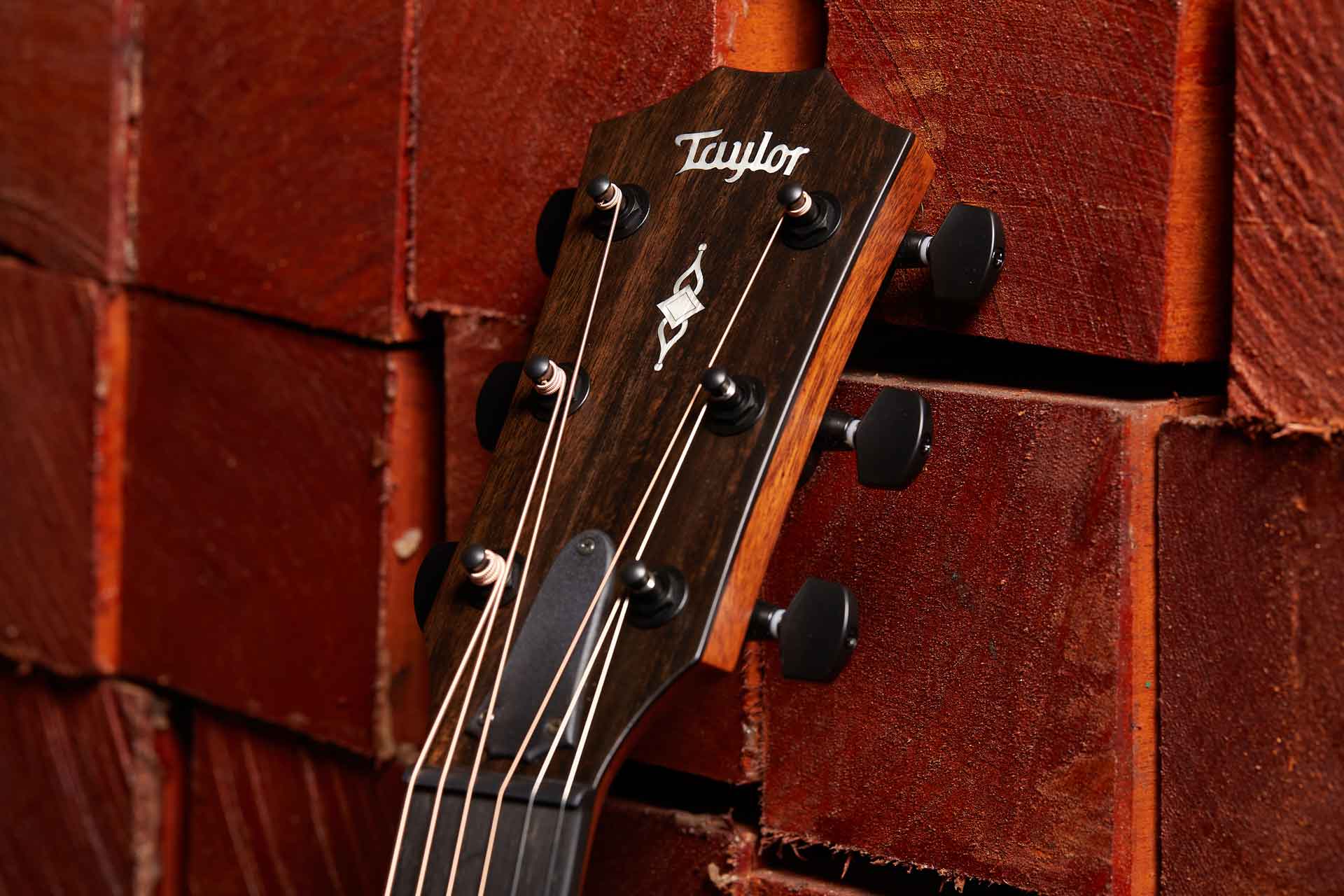
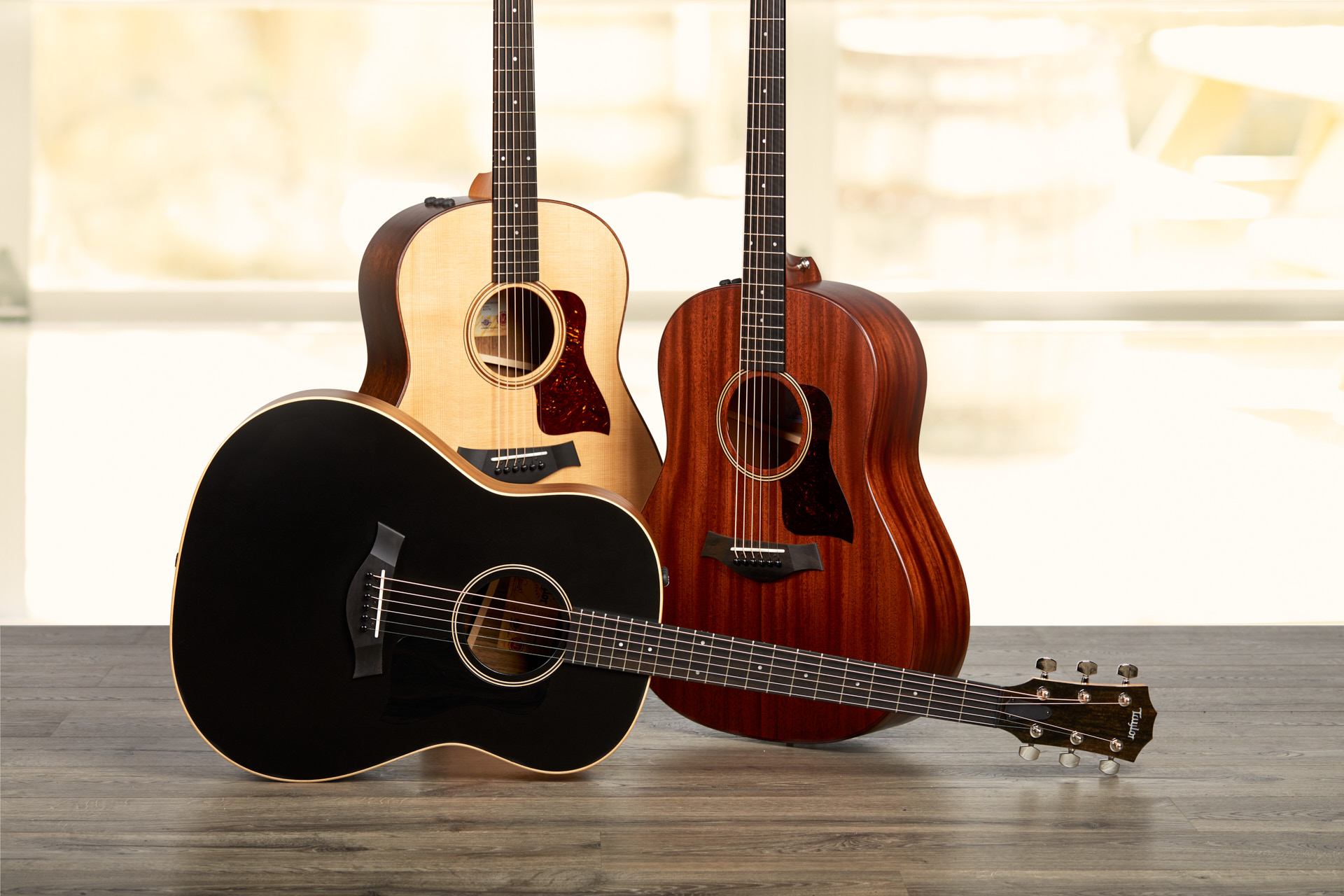
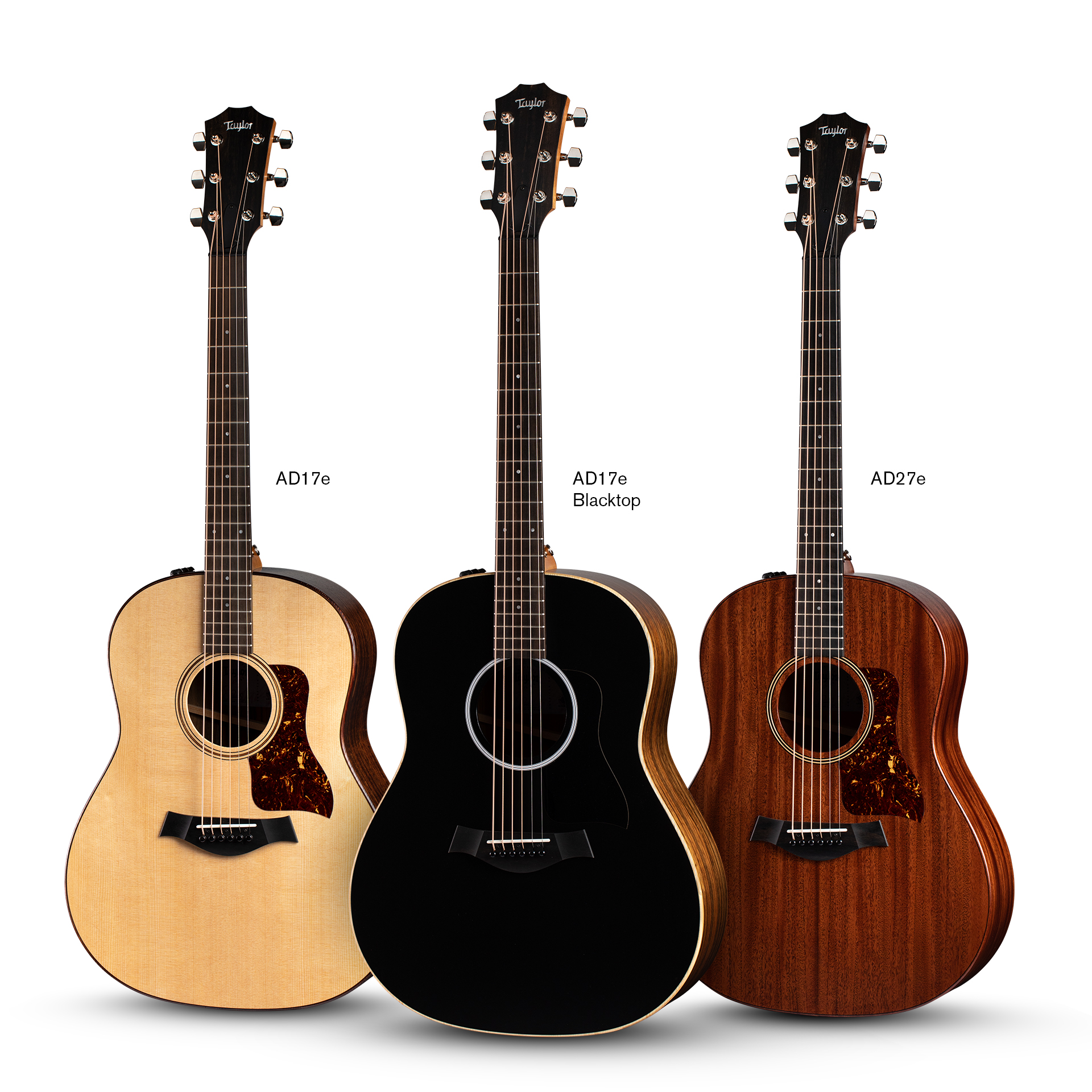
Based on our wood inventory, we arrived at three core models to launch the American Dream Series: two featuring the tonewood pairing of solid ovangkol back and sides with a solid spruce top, and a mahogany-top offering matched with solid sapele back and sides. One new wood choice featured across the series is smoked eucalyptus for the fretboard and bridge. (We’re also using eucalyptus with our new GT models, also featured in this issue.) The species we’re using is comparable to rosewood in feel and ebony in its sonic attributes. Its density makes it ultra-durable and ideal for holding frets. 

“We’ve been experimenting with this material for quite some time,” Andy says. “It makes really good-sounding fingerboards and bridges, and these seem like appropriate guitars to introduce it on.”

Guitarist Nicholas Veinoglou introduces the American Dream Series.

AD17 / AD17e

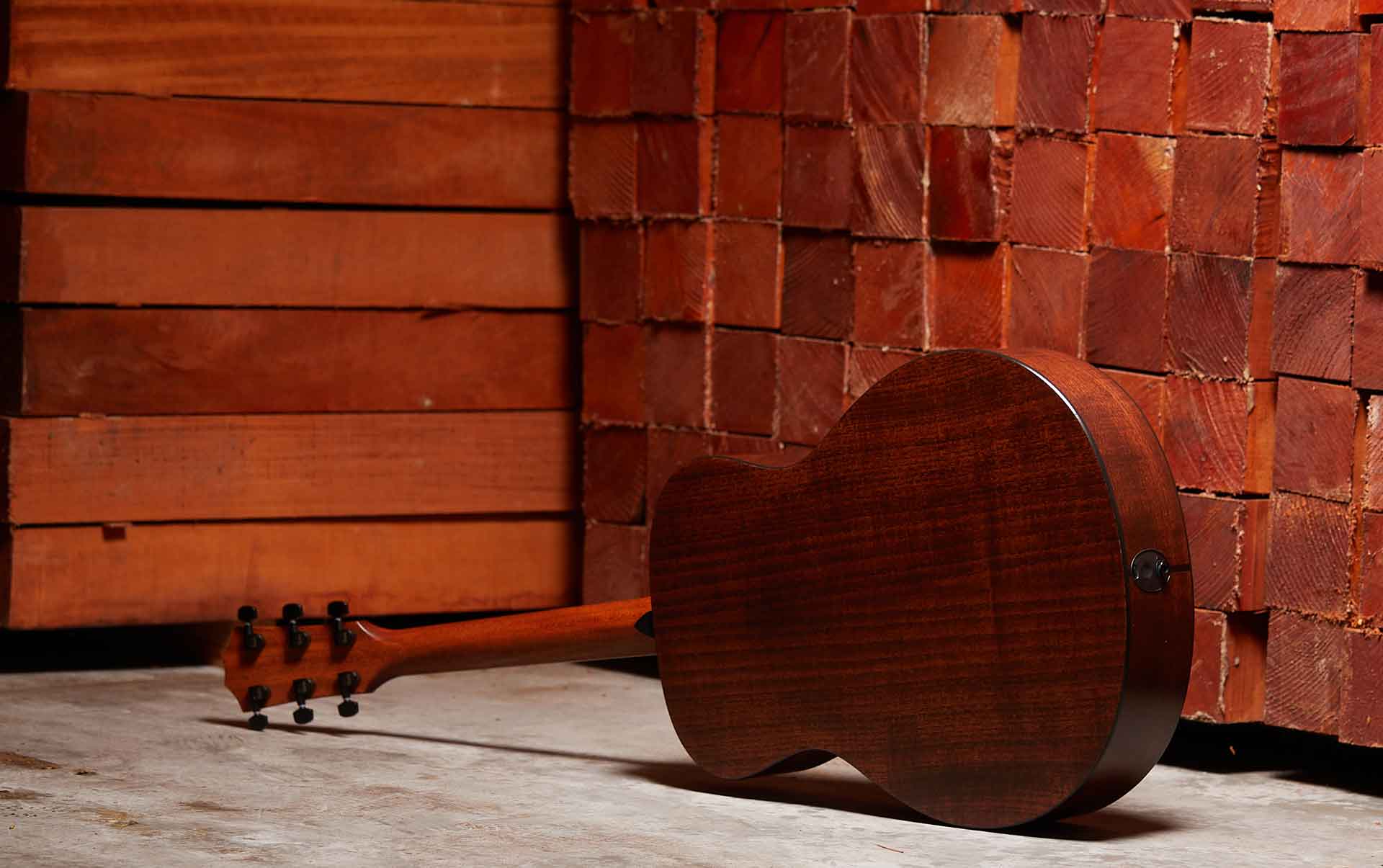
Our first Grand Pacific model to feature an ovangkol/spruce wood pairing is a great match for the V-Class-powered GP body. Ovangkol’s rosewood-like tonal range and natural midrange warmth are supercharged here, anchored by clear low-end power and enhanced by the harmonic agreement between notes made possible by the V-Class architecture. The dynamic range underscores the workhorse versatility — the guitar is responsive to light fingerpicking and more than happy to comply with an aggressive flatpicking or strumming attack. One other tone-booster comes from the ultra-thin matte finish that minimizes damping — an extra bonus considering the remarkable sustain made possible by V-Class. On this model, the ovangkol back and sides visually bear a resemblance to rosewood with the application of our dark Urban Sienna stain.
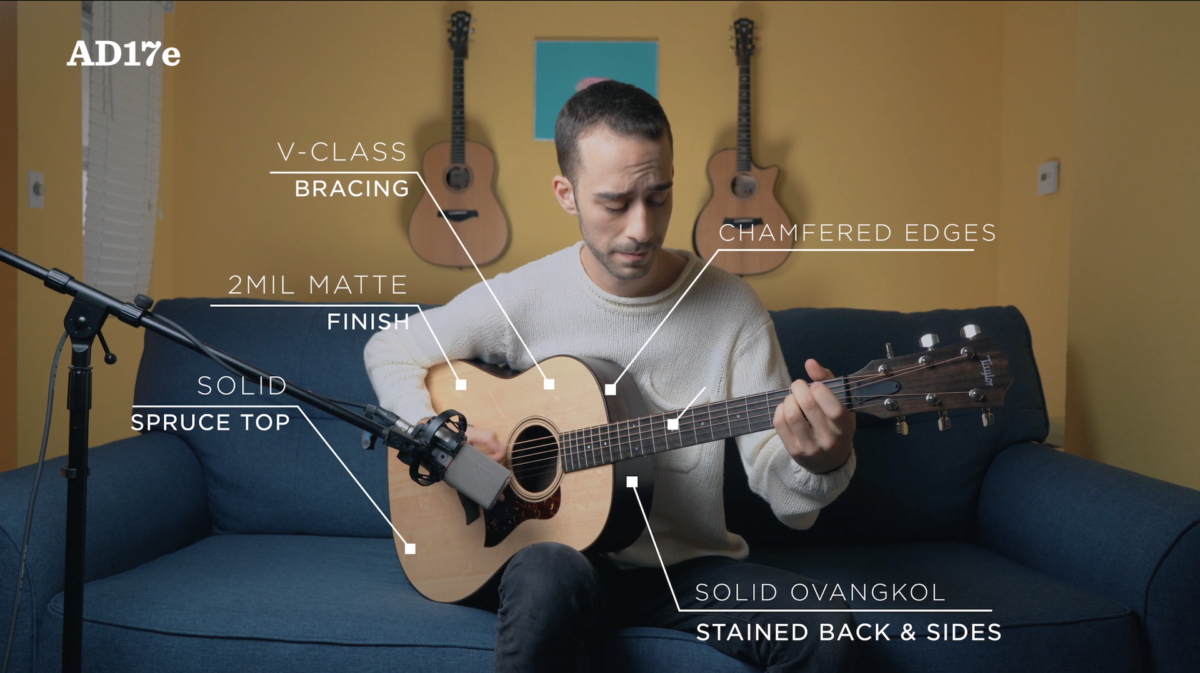
Explore the features and appointments of the AD17.

AD17 Blacktop / AD17e Blacktop

This blacktop ovangkol/spruce American Dream model offers a visually striking alternative to its natural-top sibling. Andy’s aesthetic choice here was informed in part by the same thinking as wood selection — using materials that were available at the factory. In this case, we had some water-based black paint on hand from another project we had undertaken, so Andy made a prototype with a matte-black top and black pickguard and liked how it turned out.

“It’s as straightforward as a black t-shirt.” Andy says. “It’s very much in the vein of the Henry Ford mentality. A lot of the guitars that I admire, especially those built back in the Depression and during wars or other disruptive events, were finished in materials that happened to be available.”

While the chamfered body edges are unbound, the carefully executed edge treatment on the top artfully highlights the spruce’s natural color to give the aesthetic appearance of a bound guitar. The aesthetic is complemented by a wood rosette featuring alternating black and maple rings. For these models, the ovangkol back and sides retain their natural color and variegation.

Watch as Nicholas Veinoglou puts the AD17 through its paces.

AD27 / AD27e

Boasting a hardwood mahogany top, this American Dream acoustic blends dark, rich-grained- wood hues with a voice that’s warm and robust, with consistently meaty notes that blend smoothly across the tonal spectrum. As a soundboard, mahogany’s natural compression will level out the rough edges of a player’s attack and amplify well with the ES2 pickup. Between the power, responsiveness and sustain of the V-Class/Grand Pacific chassis, the guitar accommodates virtually any playing style. Walking basslines will never sound muddy, the midrange is thick and sweet, and even the treble notes deliver pleasing depth that will coax players into the upper register.

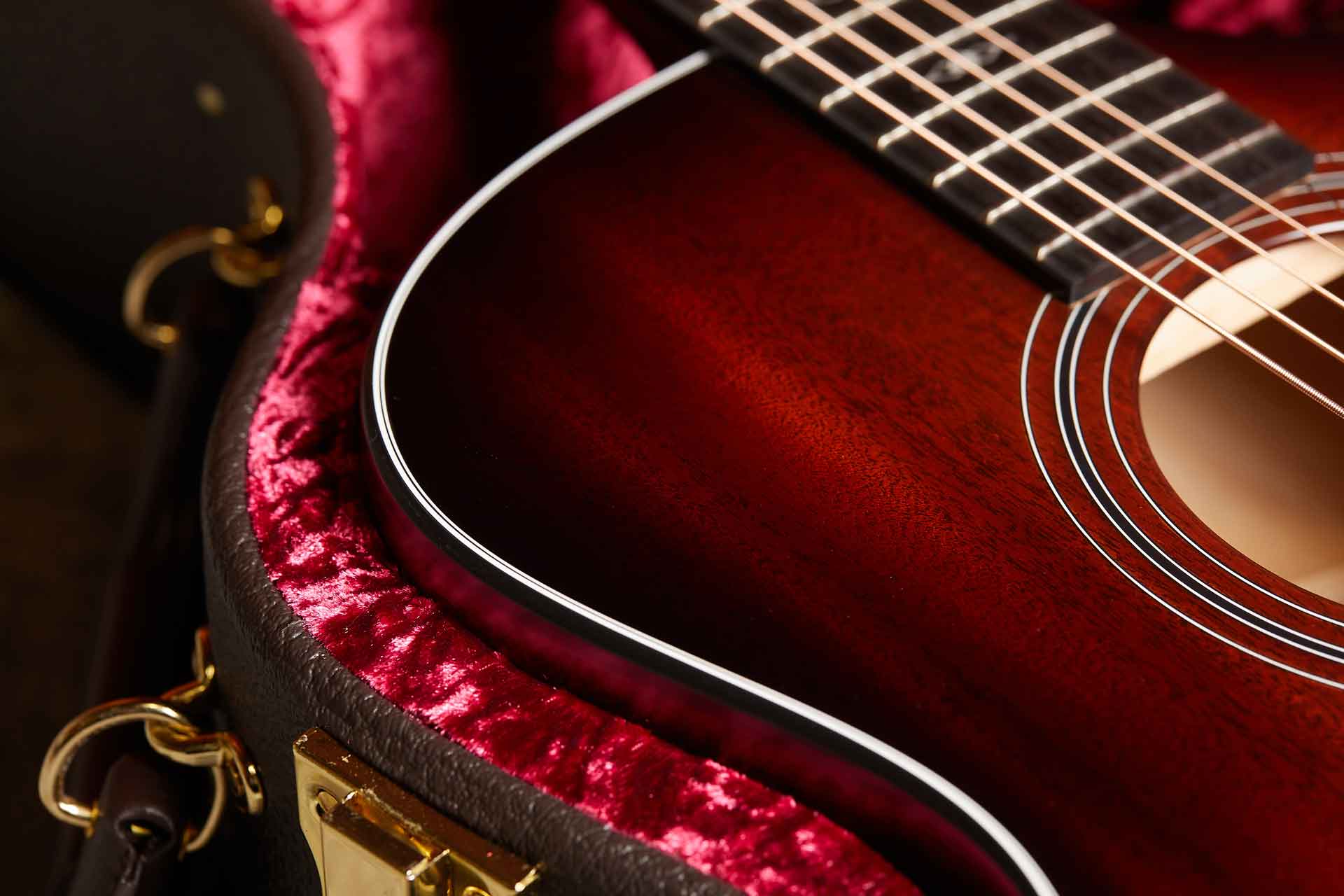
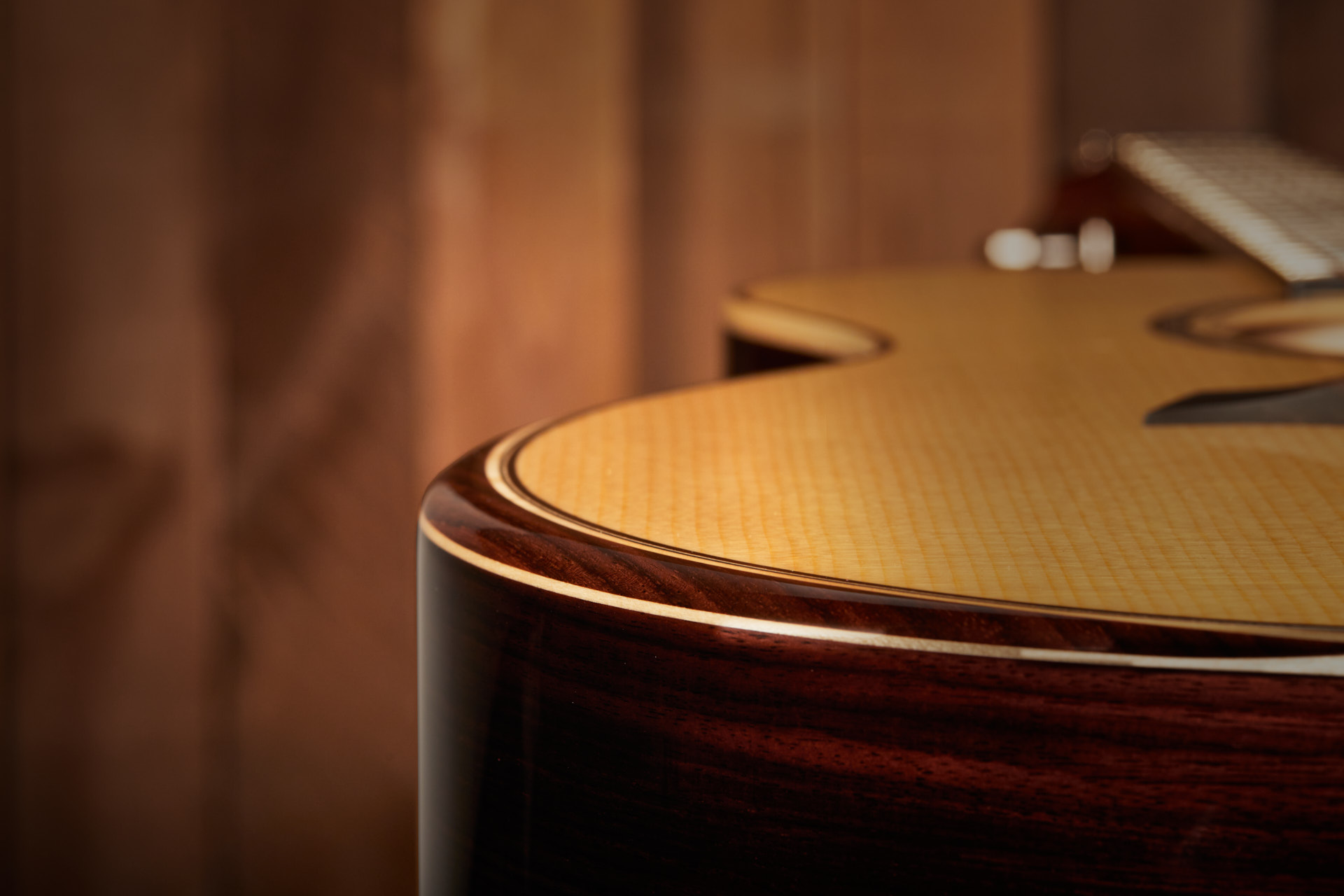
Visually, the natural color blend between the mahogany top and sapele back and sides feels seamless with chamfered edges, and the thin matte finish amplifies the natural woody character of the guitar.

Less Finish, More Character

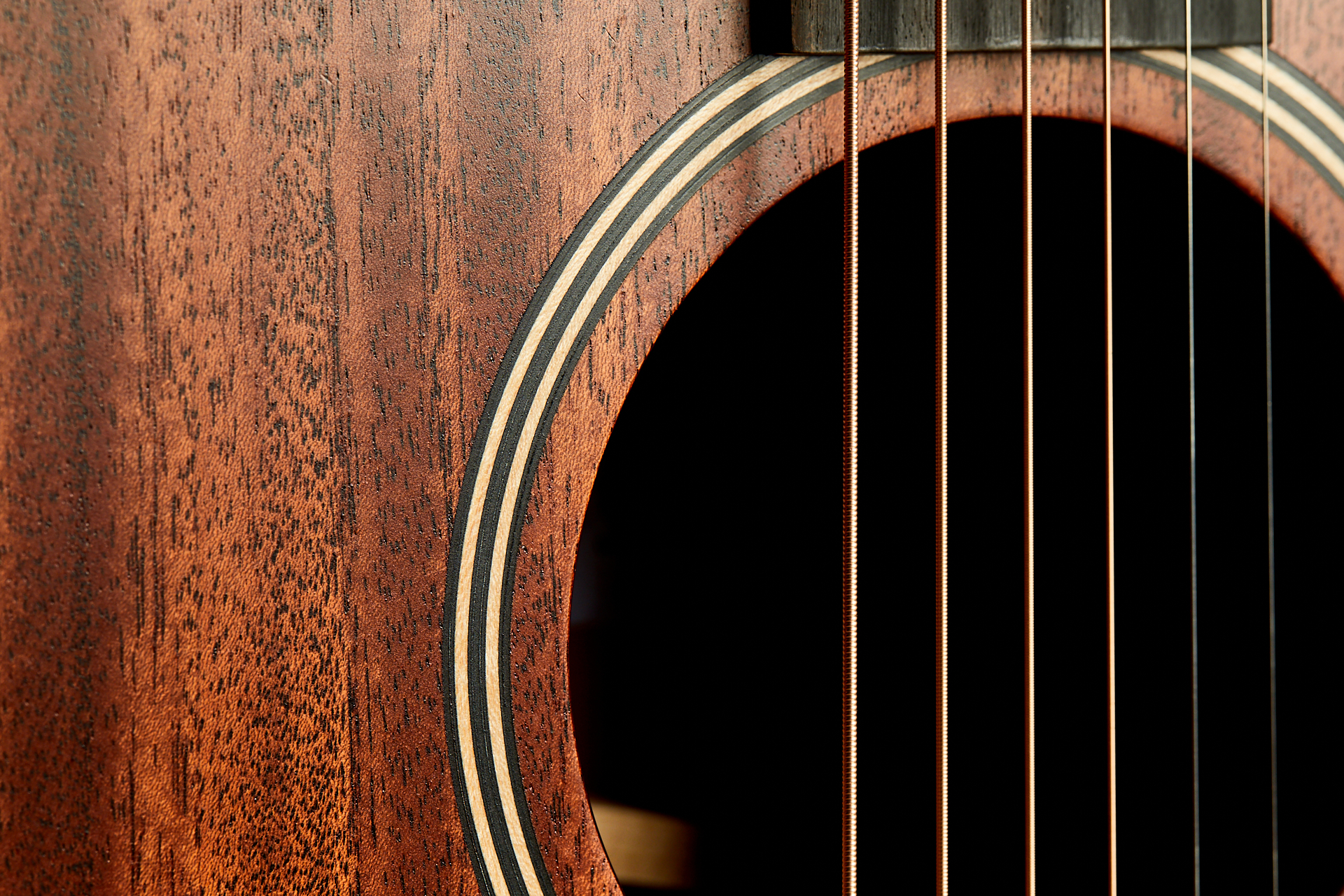
Beyond the tonal benefits of using a super-thin finish (2 mils, or two-thousandths of an inch) on these guitars, Andy says part of the intent was to further reveal the unique character of the woods selected in a way that can be both seen and felt.

“Every aspect of these designs are geared toward an individualistic ideal,” he says. “Even the type of finishing we’re doing on these guitars is deliberately restrained, chosen so the very nature of each piece of wood can be revealed in a very obvious way. You’ll feel the actual texture of the grain structure because these are very open-pored, thin finishes. You’ll feel how smooth a piece of wood wants to become as it gets sanded. You’ll feel how wide or narrow the grain of the spruce top is with the way that the finish shrinks into the grain as it ages, becoming part of each individual guitar’s identity. Every one of these instruments becomes a very unique individual.”

Character-Grade Wood

In a recent episode of Taylor’s From the Factory Podcast, Andy joined Cameron Walt and Jay Parkin from our marketing team to talk about the new American Dream guitars, providing more context around the idea of “character-grade” tonewoods selected for these guitars, and how they might differ from the grading approach for woods used to craft other guitars within the Taylor line.

“As woodworkers, the material we use already starts at the margins in the world of timber,” he explains. “We’re working with the top fraction of a percent of the most exact, pristine cut of any piece of wood available. From that perch, we further grade those materials into groups that are appropriate for every model or design.”

A good example of that is Sitka spruce, which we use for multiple series across the Taylor line. We do that in order to make ultra-consistent guitars within a series or for a particular model.

What Andy characterizes as “character-grade” wood sets — selected for our American Dream guitars — still fall within our elite instrument-worthy specifications, but for one reason or another (sometimes cosmetic), are considered outliers.

“We know these woods will make an amazing guitar, but because they aren’t within the same defined grading spectrum of what we typically put in a particular guitar model, we’ll set it aside and save it for something else,” he says. “These American Dream guitars are the perfect opportunity to build with those ‘orphaned’ pieces of wood — the outliers. They have amazing character. They sound great. We can encourage each one of these guitars to be a deliberately unique individual.”

What the Critics Are Saying

This past summer, we sent out some American Dream guitars for review, and the early reactions have been strong.

Art Thompson from Guitar Player reviewed the AD27 for the magazine’s October edition and responded to what he deemed the most rewarding aspects of V-Class bracing: “rock-solid intonation all along the neck” and “enhanced sustain, which always makes an acoustic guitar more enjoyable to play.”

“The AD27 has a big voice and it rings out clearly and has nice complexity in the midrange and lots of low-end girth,” he writes. “And the way this lightweight guitar transfers string vibrations through the body and neck is unreal. It’s resonant and dynamic, and the touch responsiveness is something that fingerstyle players will definitely appreciate.” The guitar earned the publication’s Editors’ Pick Award.

Meanwhile, over at Acoustic Guitar magazine, reviewer Emile Menasché spent a few weeks with the AD27 and found it delivered on many fronts. Immediately he picked up on some of the characteristic personality traits of Andy’s Grand Pacific design.

“The tone is deeper than almost any acoustic I’ve played,” he writes. “It sounds thick and full — but not dull. Although the treble range sounds clear and articulate, it’s accompanied by a rich undertone that gives single notes a stamp of authority.”

The guitar also responded with what he considers one of Taylor’s signature strengths — “strong sustain, accompanied by a complex decay full of bright overtones.”

Menasché also had fun exploring its dynamic range.

“If single notes and arpeggios ring sweetly, strummed chords can sound loud, massive, and robust,” he says. “Physically and sonically, the AD27 was able to stand up to my very heavy right hand. It never lost composure or sounded strident — no matter how hard I strummed.”

In the end, he found it to be a remarkably versatile workhorse.

“For weeks, I attacked the AD27 with everything in my arsenal: gentle melodies, aggressively bendy blues, jaunty gypsy jazz, Pete Townshend–esque strumming bass-style snaps and pops, and country picking. The Taylor handled it all without complaint. It was also comfortable to play for long periods…. I finished each AD27 session with far less hand fatigue than usual.”

New Model Spotlight: 326ce

Scroll Down

Urban Ash and mahogany infuse our redesigned Grand Symphony with an inspiring new sonic personality.

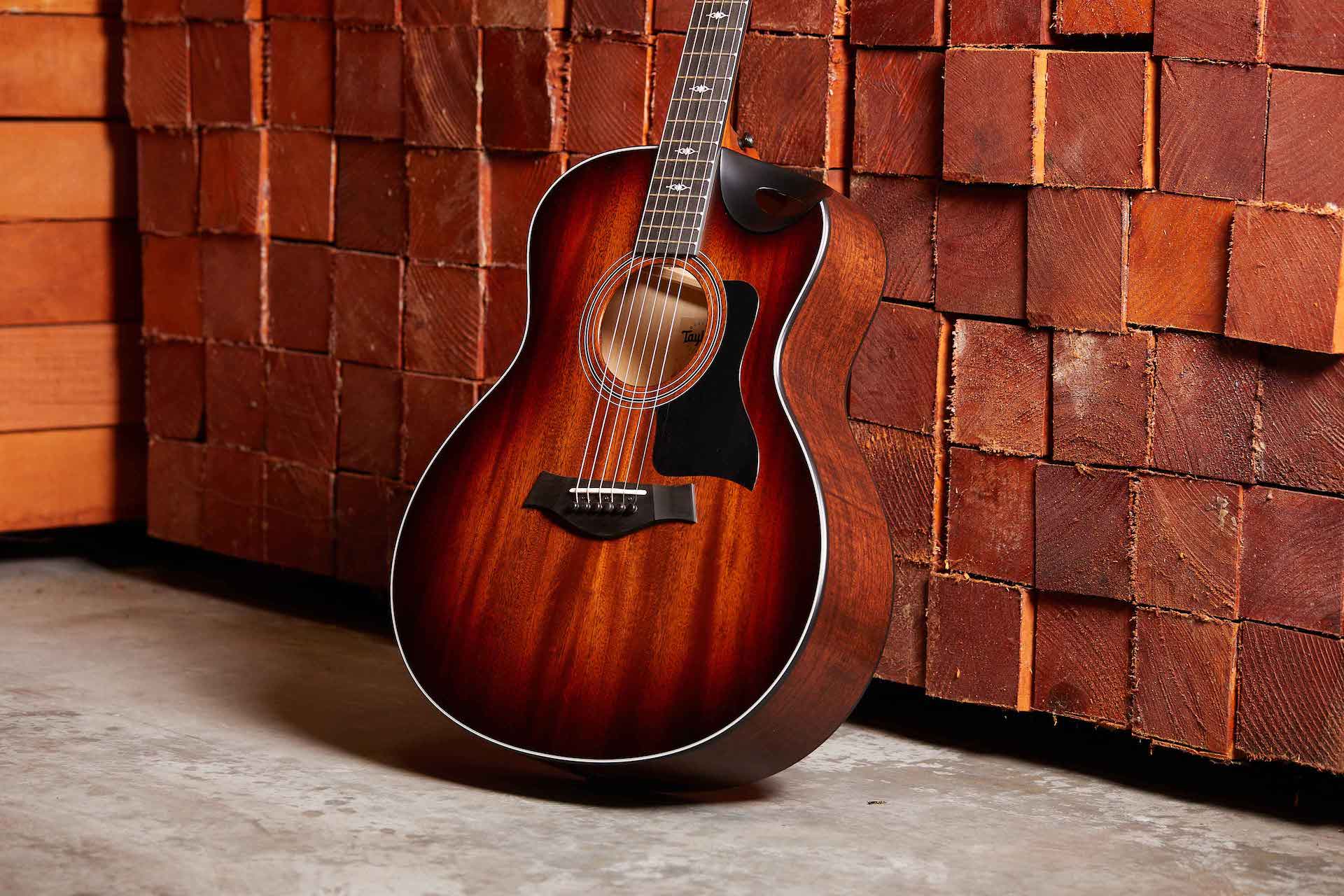
Between introducing a sustainably sourced new tonewood — Urban Ash — and reimagining a venerable body shape — the Grand Symphony — Taylor’s forward-minded pursuits have been on full display this year. No guitar braids those two threads better than the new 326ce, which brings the magic of our innovative GS design to the 300 Series. Powered by the musical engine of our V-Class bracing architecture and uniquely voiced with the help of a soundport cutaway, the new model showcases the sonic virtues of the GS design in a freshly compelling way, pairing Urban Ash with mahogany and giving players another rich acoustic soundscape to explore.

After the debut of our retooled GS models earlier this year, the rosewood/Lutz spruce Builder’s Edition 816ce and the all-koa K26ce, we wanted to bring the new body’s high-fidelity resonance to another model in a more accessible part of the Taylor line. The 300 Series felt like a natural home — it’s popular among musicians of all stripes, and it sits at an intersection of premium performance and workmanlike utility. Recently, we introduced the world to Urban Ash with the Builder’s Edition 324ce, and the 317 was the first Grand Pacific model offered outside our initial Builder’s Edition 517 and 717 tandem. So once again, the 300 Series plays host to a model that we believe deserves to be in the hands of more players.

The radically redesigned Grand Symphony body seems to fly in the face of tradition, but then again, that’s the story of innovation at Taylor. The most visible alteration is the inclusion of a soundport cutaway tucked under the fretboard’s high register. From the front, the bottom contour of the scoop visually follows the line of a Florentine cutaway with its sharp “horn.” View the Grand Symphony from behind, though, and you’ll see that the back has been left totally intact. The design balances the benefits of a cutaway with the lung capacity of the GS body.

Lance Allen plays his song “Rest Your Way Home” on the new Taylor 326ce.

The soundport itself also exerts a powerful influence on the Grand Symphony’s musical response. Offset from the top by about 45 degrees, the soundport changes how vibration disperses from the guitar and through space, leveraging the body’s large internal air capacity to produce an immersive effect that, from the audience’s perspective, almost feels like being in the middle of a surround-sound field.

“One of our new Grand Symphony’s most alluring traits is the way its notes bloom and take on new musical colors as they sustain out.”

The 326ce capitalizes on the body shape’s expansive musical qualities thanks to its combination of solid Urban Ash back and sides, a solid mahogany top, and V-Class bracing. Urban Ash, responsibly sourced from trees in California municipal areas scheduled for removal, tonally resembles old-growth Honduran mahogany, with a robust midrange characterized by strong fundamental notes. Focused and punchy, the 326ce’s hardwood pairing takes flight with V-Class architecture under the hood. Enhanced volume, sustain and intonation come standard with all V-Class models; paired with Urban Ash and mahogany, you’ll also hear more essential character from the materials—woody, warm tones that remain clear and articulate even as they propagate through the room. One of our new Grand Symphony’s most alluring traits is the way its notes bloom and take on new musical colors as they sustain out. The experience invites players to allow their notes and chords to breathe, and for recording enthusiasts, it opens up a whole new world in terms of experimenting with microphone placement to capture different acoustic textures.

The GS redesign also enhanced the body shape’s playability and overall responsiveness, thanks to the slightly shorter 24-7/8-inch scale length and light-gauge strings, which one might not expect on a guitar body of this size.

Aesthetically, the 326ce incorporates ebony for the soundport cutaway scoop, which beautifully complements the back and sides. Otherwise, the guitar shares most of the detailing associated with the 300 Series, with standard appointments such as black binding with subtle black-and-white pinstriped purfling around the top, plus a matching three-ring rosette. Other touches include Italian acrylic Gemstone fretboard and peghead inlays, satin black tuners, a black pickguard, and our Urban Sienna color treatment (top, back, sides and neck) with a shaded edgeburst top, all under a satin finish. The guitar also features our ES2 electronics and ships in a Taylor deluxe hardshell case. 

With its radiant voice and room-filling projection, the 326ce promises to be a uniquely expressive tool for any guitar player looking to expand their acoustic frontier. 

Adding Curve Appeal: 800 Series Update

Scroll Down

We’ve upgraded select models from our flagship 800 Series to feature an armrest as we streamline our rosewood guitar offerings.

Between introducing a sustainably sourced new tonewood — Urban Ash — and reimagining a venerable body shape — the Grand Symphony — Taylor’s forward-minded pursuits have been on full display this year. No guitar braids those two threads better than the new 326ce, which brings the magic of our innovative GS design to the 300 Series. Powered by the musical engine of our V-Class bracing architecture and uniquely voiced with the help of a soundport cutaway, the new model showcases the sonic virtues of the GS design in a freshly compelling way, pairing Urban Ash with mahogany and giving players another rich acoustic soundscape to explore.

The most notable migration is the addition of our radius armrest to popular models such as 814ce, 812ce and 812ce 12-Fret. Sculpted into the bass side of the guitar’s lower bout, the rounded armrest helps ease some of the pressure off your strumming or picking hand, elevating the comfort and enabling players to pick or strum in a more relaxed way.

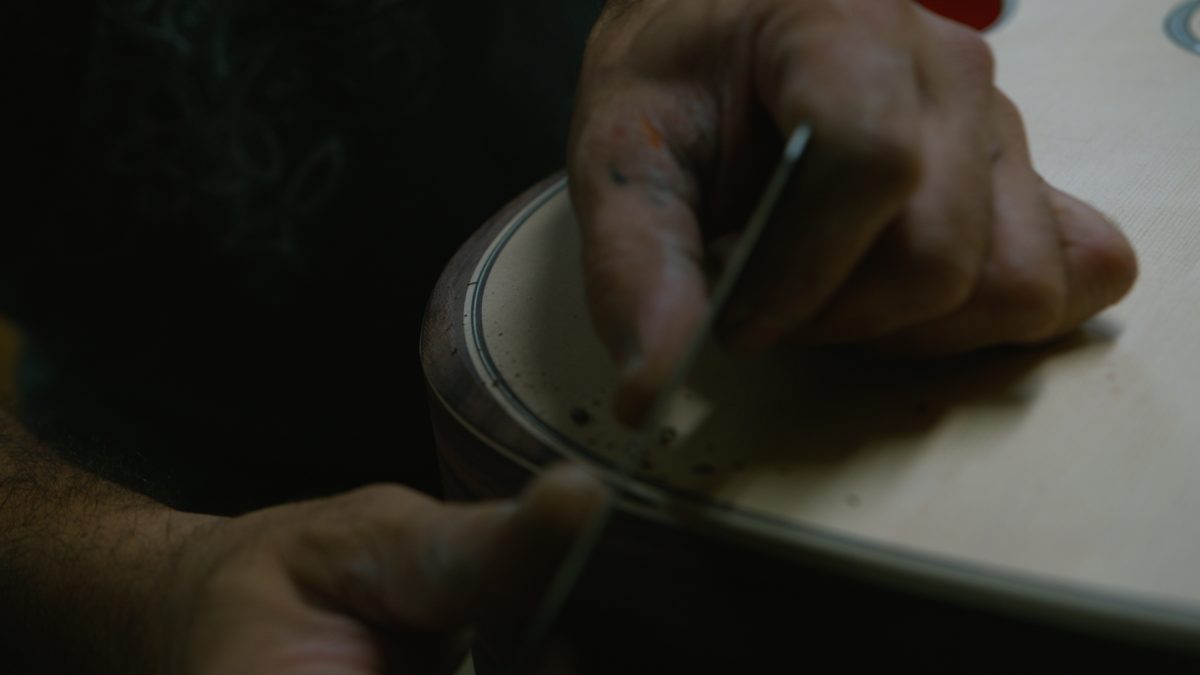
Watch a radius-style armrest being crafted at the Taylor factory.

Producing our radius armrest requires careful attention from our most skilled craftspeople. In the 800 Series, the armrest will be made from East Indian rosewood to match each guitar’s back and sides, complemented by contrasting maple binding. The 814ce and 812ce feature Taylor smoked nickel tuners, while the 12-fret has slot-head nickel tuners with ebony buttons.

Some guitars within the 800 Series, such as the nylon-string 812ce-N, will remain unchanged by this year’s update. Others, specifically the new Grand Symphony Builder’s Edition 816ce and Grand Orchestra 818e, feature distinctive identities of their own within the 800 Series, and will retain their current specifications. Look for revamped 800 Series guitars at authorized Taylor dealers in-store or online this fall.

Lindsay Love, our Artist and Community Relations Manager, plays the new 814ce and 812ce.

  • 2020 Issue 3 /
  • An Introduction to Recording Acoustic Guitar
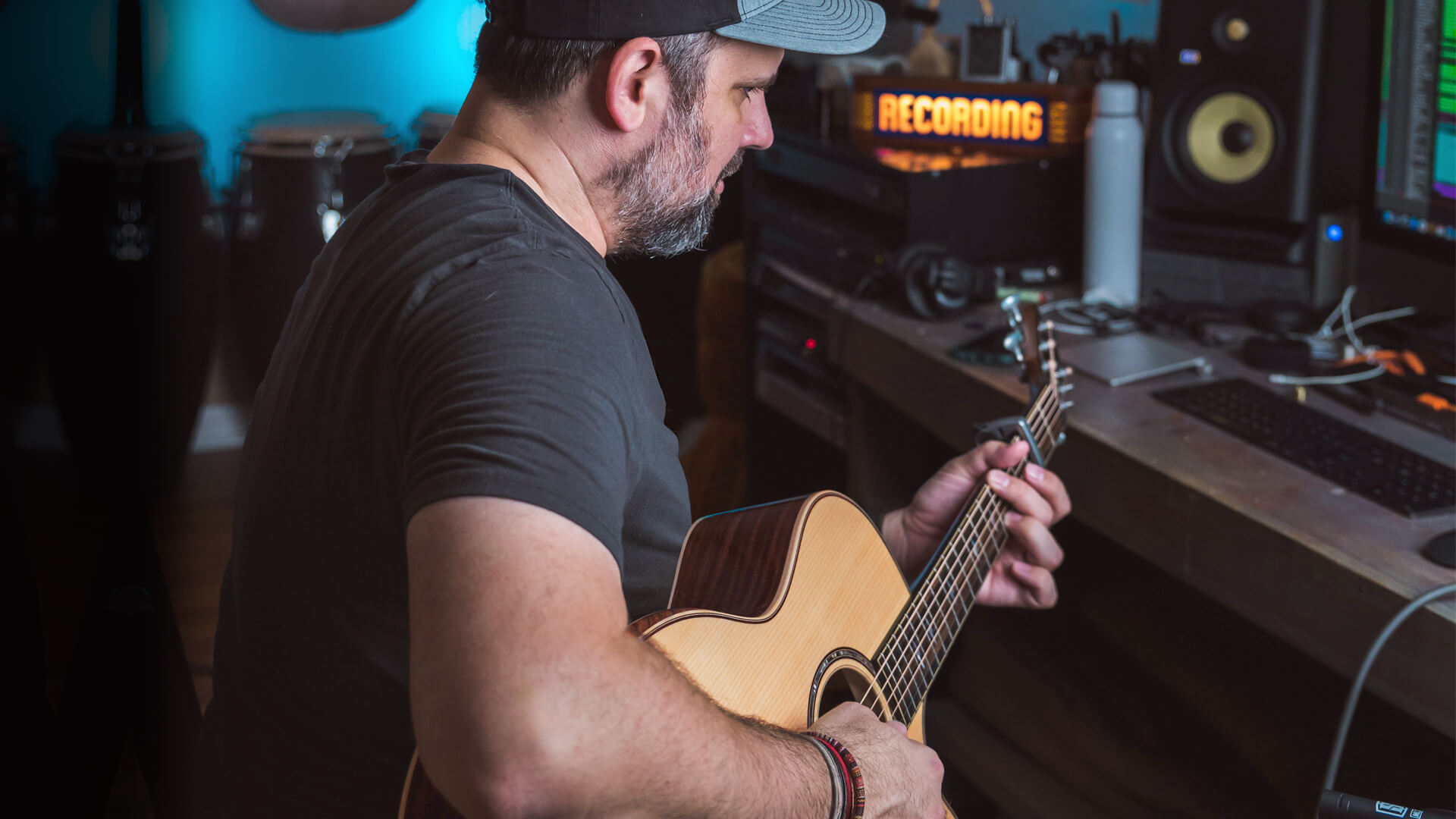
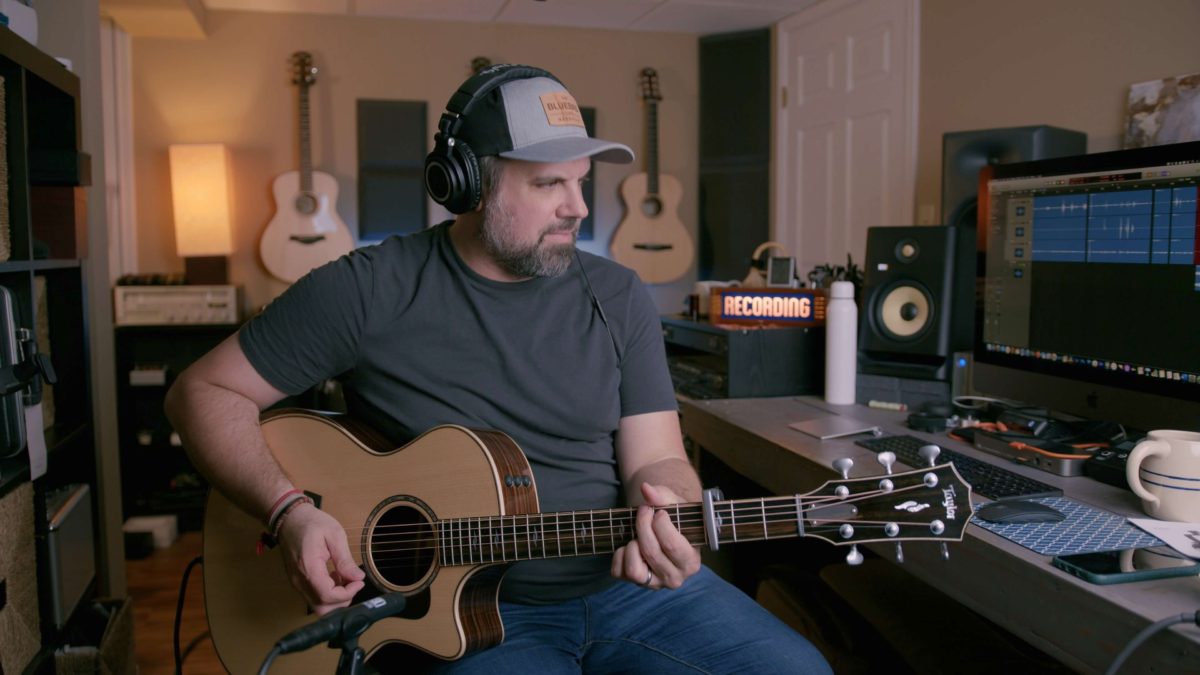
Gabriel O'Brien plays his Taylor guitar at his home recording studio

An Introduction to Recording Acoustic Guitar

Scroll Down

Looking to do some recording at home? Here’s how to get a great sound from your acoustic guitar.

Each of us probably has our own clear memory of when the COVID pandemic officially flipped the switch on normal life. At Taylor, we’d been tracking its global progression like a slow-moving weather front, and on March 18, we temporarily suspended guitar production at our California campus, not knowing when we would be able to reopen.

For master builder Andy Powers, the stark, far-reaching reality of the situation hit home from another perspective when he woke up one morning around that time and scrolled through text messages from musician friends from all around the world.

Home recording has become popularized thanks to innovations in technology and the increased availability of relatively inexpensive equipment. It’s evolved from four-track tape recorders to digital audio workstations, or DAWs, and audio interfaces. When I started out, there weren’t great resources to learn about recording at home. There were a few books you could find at the library, but in the pre-Internet days, resources were scarce. My dad, a singer-songwriter, had long been recording at a friend’s home studio, first on four-track and eight-track tape machines and then on ADAT. Most people were using analog machines or early digital all-in-one systems, though software-based recording was rapidly growing.

My first session in an Akron, Ohio, recording studio was captured to two-inch magnetic tape. My goal was to write and record songs, so I bought an early USB interface and the least expensive condenser microphone I could find locally and began experimenting. That led to a lifelong love of recording that became a big part of my career.

I’ve been extremely fortunate to work with Taylor Guitars on several projects: The Acoustic Sessions, Coffee & Guitars, From the Factory Podcast, and now the Music Together Project (see Soundings in this issue). I’m also one of the administrators of the Taylor Guitars Owners Group on Facebook and help moderate a home recording group.

Let’s say you’ve got your first recording interface and maybe even a microphone. Now what? After a post to my groups, here are a few questions that consistently were asked about recording acoustic guitars.

What’s the best guitar to record with?

Just like choosing guitars to play at home or in a band, tonewood combinations and body shapes play a big role in the end result of your recording. There are no hard and fast rules dictating what you should use. Much like selecting a guitar for yourself, this is all about personal preference. You may like bold strumming for folk and bluegrass sounds and want to try a Grand Pacific with rosewood or mahogany back and sides. You may want the guitar to sit well in a mix and try a 600 Series Grand Auditorium with maple back and sides. You may want to play a delicate fingerstyle piece on a Grand Concert, or something more orchestral-sounding on a Grand Symphony. Or you may want to totally subvert those ideas and use things in a different way. There’s no wrong choice to be made here, only different creative ones. Everyone who knows me knows I’m a big fan of mahogany, having bought a 514ce as my first Taylor back in 2005. I made a whole record with just that one guitar. When I got my Builder’s Edition 517 WHB, that guitar immediately became the center of my “guitarsenal.” Nowadays I tend to use my Builder’s Edition 517 WHB for up-the-middle strumming where I want to hear woody, warm mahogany tones and a rosewood/spruce 814ce for nearly everything else.
“A guitar top moves air, so you want to give some room between the top and the microphone so you can capture some of that.”

What is the best way to mic an acoustic guitar?

What’s the best way to mic an acoustic guitar?

Where you place a microphone matters far more than what microphone you use, and moving a microphone during the recording process is a far better solution than anything you can do after the recording is made. Understanding how to capture the best sonic picture of your guitar to fit your purpose is a great place to start.

If you’re recording acoustic guitar for an instrumental piece, you may use several microphones to capture the full range of sounds emanating from your instrument to give the listener an immersive experience and capture the sound of not only the guitar, but the room it’s recorded in. Sometimes engineers will use two of the same microphone in a stereo position like XY, which is roughly the way your ears hear, to place the listener right in front of the guitar. In a pop or rock mix, you may only use one microphone to capture the guitar, focusing instead on its percussive qualities to cut through a mix. I typically use anywhere between one and three microphones on acoustic guitar. But my starting point is nearly always the same.

If you’ve Googled “recording acoustic guitar” or searched YouTube, you may have seen or read about placing a microphone somewhere around the twelfth fret of the guitar, or somewhere around where the neck meets the body. This is to avoid pointing a microphone directly into the soundhole of an acoustic guitar, which results in a big “puff of air,” which Andy Powers talked about extensively when the new Grand Pacific models launched.

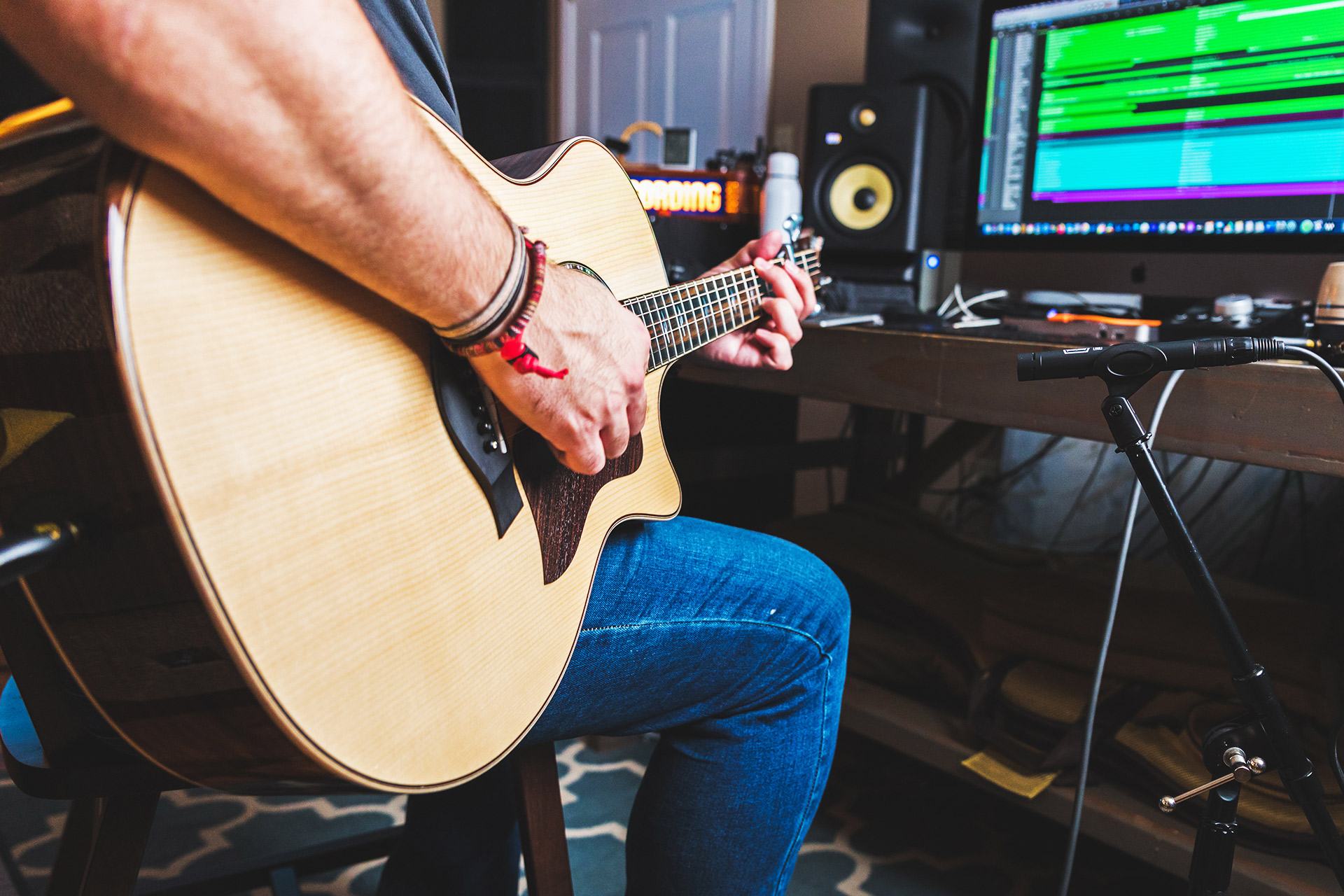
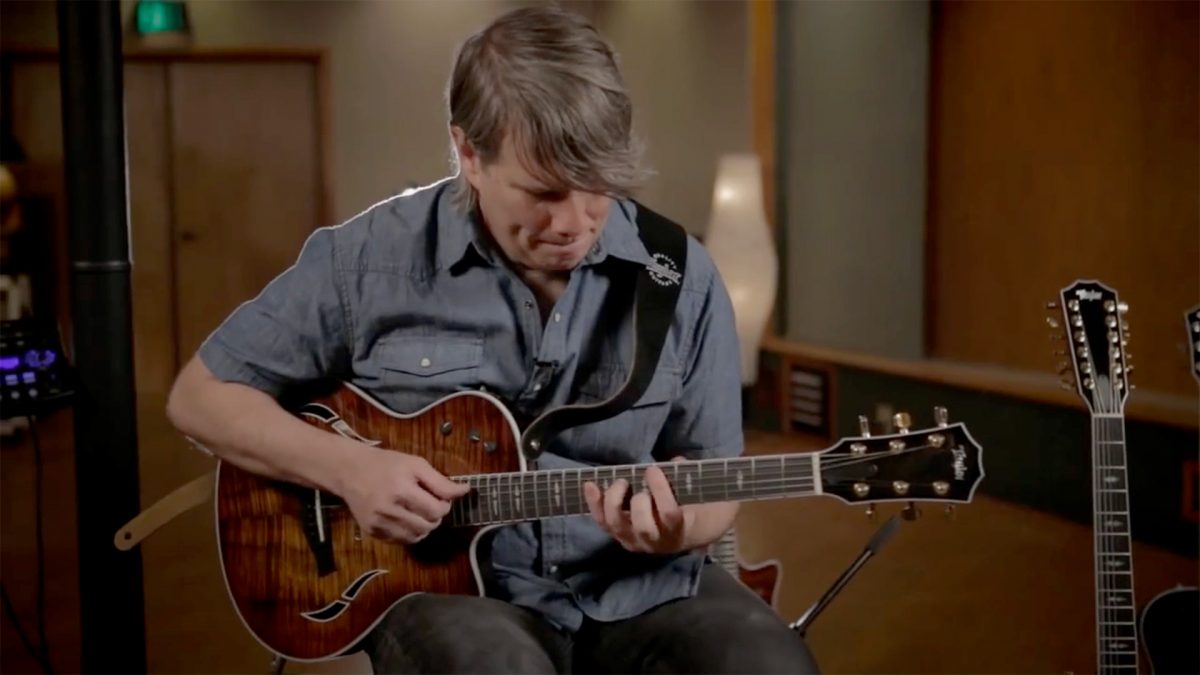
I have a slightly different starting position. I like to begin with a microphone aimed at the treble side of the upper bout of the guitar — the cutaway region — from approximately 12 inches away. I’ll angle the microphone slightly away from the soundhole if I’m getting too much boom on the guitar. When someone tells me their guitar sounds too bright or stringy as they’ve recorded it, microphone placement is the first thing I ask about. More often than not, I find they’ve aimed at the standard twelfth fret region but with the microphone only a couple inches from the guitar’s neck, eliminating all the body and resonance. Keep in mind as you try microphone positions that a guitar top moves air, so you want to leave some room between the top and the microphone so you can capture some of that.

What’s the best microphone for recording an acoustic guitar?

What’s the best microphone for acoustic guitar?

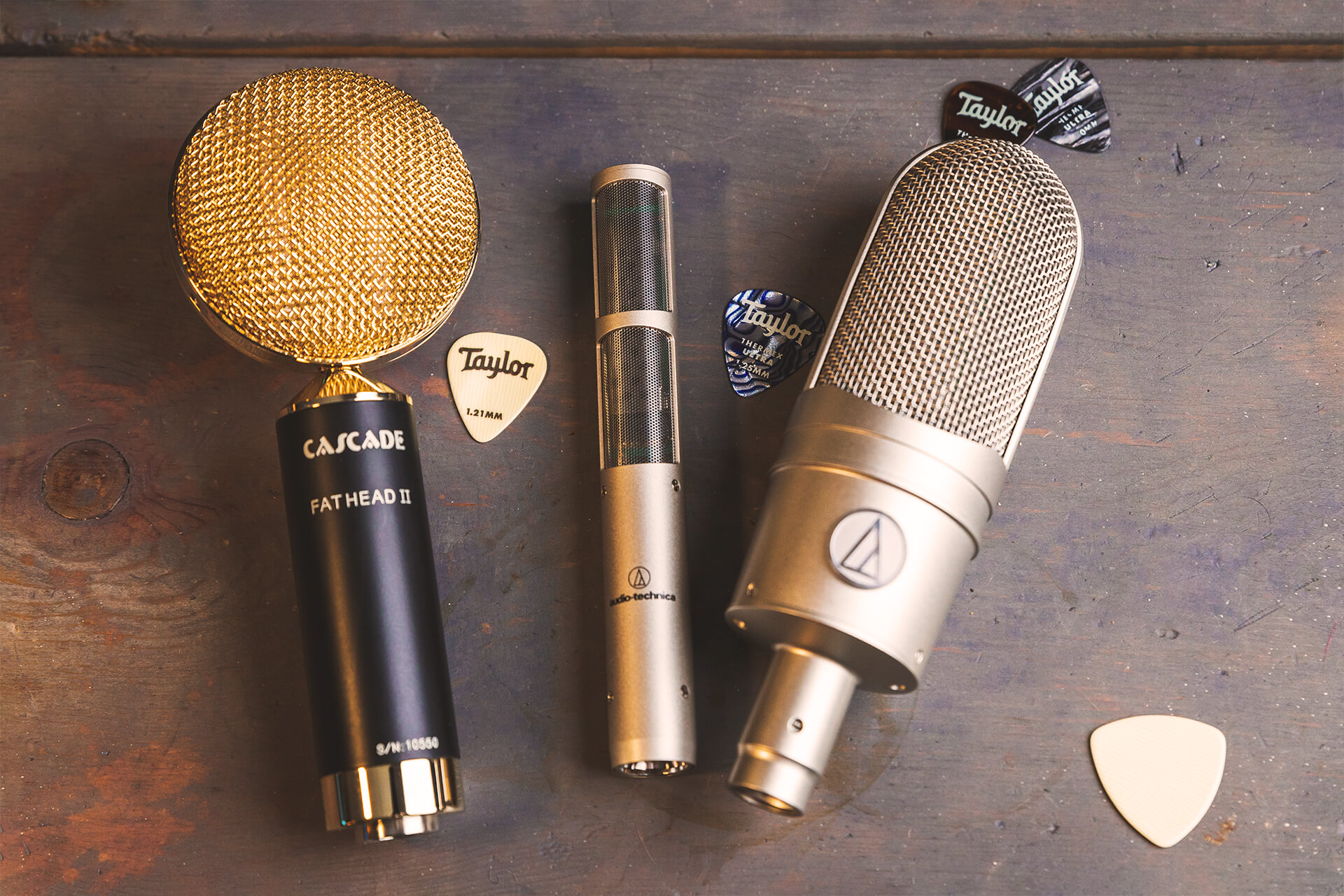
That’s a question I commonly see asked in home recording studio forums and Facebook groups. There are three key types of microphones people commonly employ to record acoustic guitars.

Dynamic Microphones

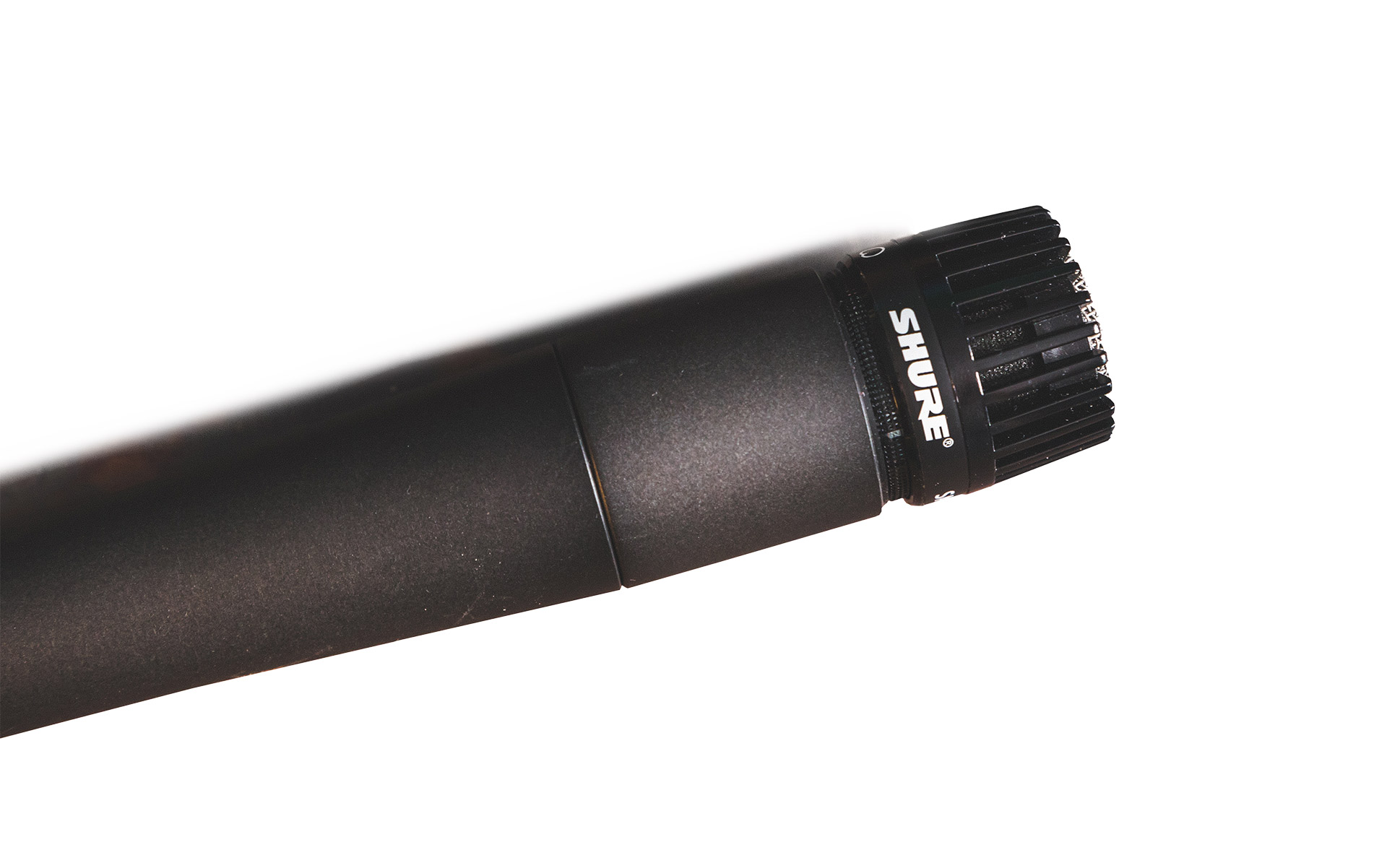
Dynamic microphones, like the ubiquitous Shure SM57, feature a moving coil glued to a diaphragm — a membrane — attached to a magnet. When sound waves hit the diaphragm, it vibrates, much like how a speaker cone functions, and the coil moves with it. The movement of the coil alters the magnetic field and is converted into an electrical signal. This requires higher sound pressure levels to produce sound, so often you see these mics used during live performance, but you can also use them to record. Dynamic microphones do require significant gain to capture quieter sources like acoustic guitars, as opposed to louder sources like snare drums and electric guitar amps. These microphones are unidirectional, meaning they only “hear” sound from one side.

Ribbon Microphones

Ribbon microphones, like the Royer R-121, follow a similar principle, but instead of the diaphragm and coil use a thin piece of metal foil suspended in the middle of the microphone. Because of this, ribbon microphones are bi-directional, meaning they pick up sound from both sides. Ribbon microphones, like dynamic microphones, generally require a lot of gain. An exception to this is the Audio Technica AT4081, which utilizes 48v phantom power, a current that runs back up the microphone cable from your interface or console.

Condenser Microphones

Condenser microphones, like the Shure SM81 or Audio Technica AT4040, are a bit more complex. They use a diaphragm coupled with a metal plate that is electrified and run through a circuit that internally strengthens the signal, giving it far greater sensitivity and output. All condenser microphones require phantom power (save a few that offer a battery operation for remote use). Condenser microphones are also typically denoted by the size of their diaphragm, and though one isn’t necessarily better than the other, large-diaphragm condensers have slightly less noise, while small-diaphragm condensers preserve slightly more detail. Some condenser microphones can be made multi-directional by placing two diaphragms back-to-back.

The truth is there’s no such thing as a best microphone. There is a wide variety of microphone types that can serve to color your sound in a range of ways. If you’re just starting out, a small-diaphragm condenser is probably the easiest of these to use. An interesting new option is a condenser microphone that pairs digital modeling technology in the form of plug-ins with microphones to change their characteristics to those of other microphones. Slate Digital’s ML-2 is a great and inexpensive way to get a lot of sounds out of one microphone.

Can I record my guitar by plugging in with the ES2?

Can you plug in your guitar to record it?

If your acoustic guitar has an onboard pickup, you have another easy way to capture a recording of it. I’ve had great success working with Taylor’s ES2 electronics. While a microphone will capture the most natural voice of the guitar, the onboard ES2 pickup system is a great way to get started and can be a great addition to using a microphone. In fact, anytime I’m recording instruments at a video shoot like the Acoustic Sessions videos, I always take a guitar cable and a direct box so I can record from the pickup along with any microphones I’m using. This gives me a backup audio source if there’s a noise in the room or the artist tilts or rotates away from the ideal microphone position. It can also be of help if someone plays delicately or plays a lot of single-note runs because the pickup will add definition. A direct box converts the high-impedance signal of a standard instrument cable to a low-impedance signal of a microphone cable. Some recording interfaces even have a dedicated DI built in as an instrument input. In fact, the intro guitar lick heard at the beginning of every Acoustic Sessions video is my 814ce plugged in and recorded solely via the ES2 pickup.

It’s important to note that getting a recording of a pickup is a bit different than hearing it out of a PA system, where it’s passed through a sound board, EQ, compression and speakers moving air into the room where you’re standing. This is easily addressed in the mixing stage and is still a great option for recording. I hope this helps you get started down the road to recording your guitars. Like playing guitar itself, recording and mixing audio is its own skill set to develop and enjoy, and a wonderful way to capture and share music.

  • 2020 Issue 3 /
  • Sound, Feel and Focus: 3 Ways to Improve Your Playing
Nicholas Veinoglou with Taylor acoustic guitar

Sound, Feel and Focus: 3 Ways to Improve Your Playing

Scroll Down

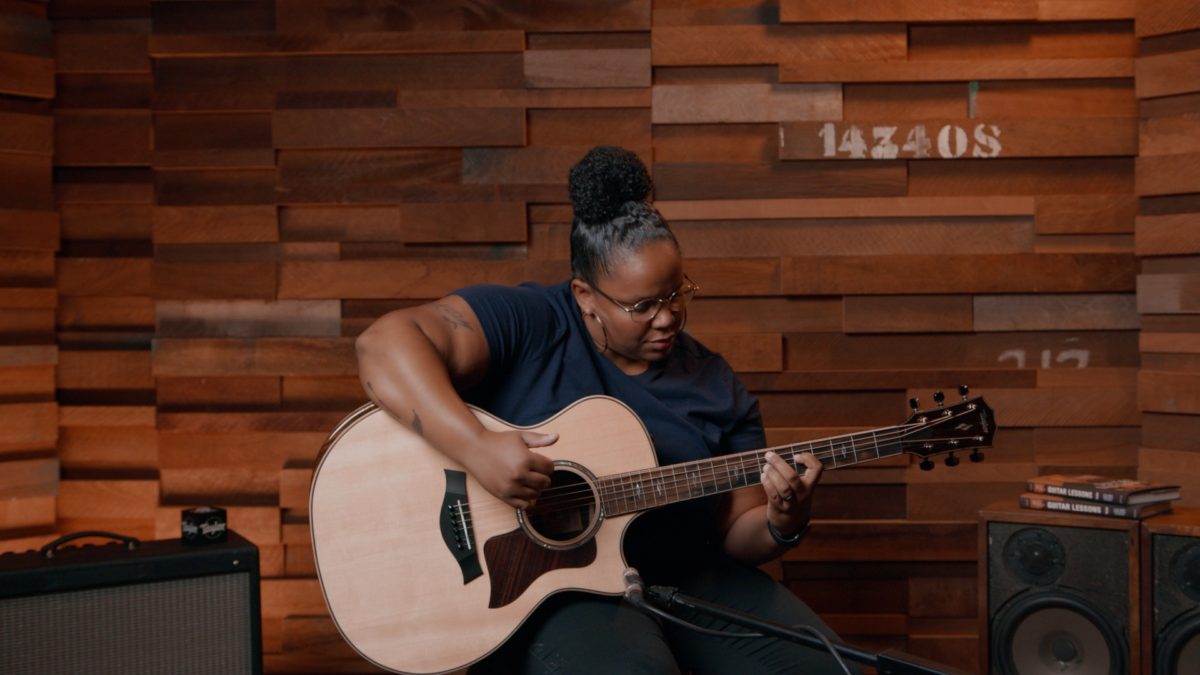
Music director, songwriter and guitarist Nicholas Veinoglou kicks off a new video instruction series with three foundational tips.

Each of us probably has our own clear memory of when the COVID pandemic officially flipped the switch on normal life. At Taylor, we’d been tracking its global progression like a slow-moving weather front, and on March 18, we temporarily suspended guitar production at our California campus, not knowing when we would be able to reopen.

For master builder Andy Powers, the stark, far-reaching reality of the situation hit home from another perspective when he woke up one morning around that time and scrolled through text messages from musician friends from all around the world.

To kick things off, we asked multi-genre guitarist, songwriter, producer and recording artist Nicholas Veinoglou to share some basic tips for adding color to your guitar’s tone, relaxing your fretting arm, and making the most of your practice time. In each video, Veinoglou plays a GT Urban Ash guitar.

Nicholas Veinoglou demonstrates how adjusting your picking position can create new musical colors.

Picking Location and Tonal Colors

In his first segment, Veinoglou demonstrates how shifting the location of your picking hand when you play can add warmth or brightness to your tone, depending on the sound you’re seeking. Veinoglou compares it to the world of electric guitar pickups, where a neck pickup and bridge pickup will produce different tonal colors. Many acoustic players keep their strumming or picking hand in one position—often near or right above the soundhole—but Veinoglou demonstrates how shifting the position of your hand closer to the neck or bridge can alter your tone quite dramatically. Strum or pick near the saddle, where the strings feel stiffer, and you’ll hear a much brighter, treble-emphasized tone. Move toward the fretboard extension for a warmer, more rounded tone. As Veinoglou describes, this is a great way to add color and tonal dynamics to your music.

Work on relaxing your fretting hand to make chords sound clearer and reduce the strain on your wrist.

Relaxing Your Grip

Next, Veinoglou addresses a common tendency among newer acoustic players to tense up while fretting, especially as they’re learning new chords or guitar lines. Forming chords, especially more complex shapes, can be a challenge, and many learners become frustrated by dead notes or buzzing. Though many instinctively compensate by trying to clamp down harder on the strings, Veinoglou demonstrates how only slight pressure is needed to make the note ring clearly. Instead of squeezing the strings with a vice grip, Veinoglou says, focus on relaxing your fretting arm, wrist and hand. This will help you adjust the position of your fingers to clear up any dead notes, and will help save you from cramped fingers and potential wrist problems down the line.

Break your practice routine into smaller chunks focused on specific skills.

Practicing with Focus

Finally, Veinoglou suggests an alternative practice strategy to help you focus on productive exercises during your guitar practice time. Instead of setting aside one large chunk of practice time (say, an hour per day), which makes it more likely that you’ll get distracted and lose focus, try blocking out shorter intervals of 15-20 minutes and allowing yourself to take breaks in between. Devote each block of practice time to a specific subject and try to block out potential interruptions (e.g., set your phone to airplane mode). This makes it easier to stay on-task and work on the skills you want to improve.

The GS Mini Turns 10

Scroll Down

A decade after its debut, our fun-size acoustic is one of the most popular guitars on the planet.

Between introducing a sustainably sourced new tonewood — Urban Ash — and reimagining a venerable body shape — the Grand Symphony — Taylor’s forward-minded pursuits have been on full display this year. No guitar braids those two threads better than the new 326ce, which brings the magic of our innovative GS design to the 300 Series. Powered by the musical engine of our V-Class bracing architecture and uniquely voiced with the help of a soundport cutaway, the new model showcases the sonic virtues of the GS design in a freshly compelling way, pairing Urban Ash with mahogany and giving players another rich acoustic soundscape to explore.

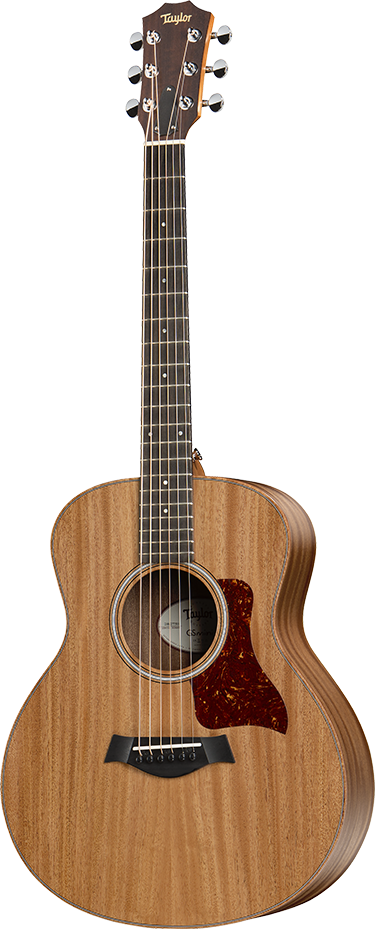
GS Mini Mahogany

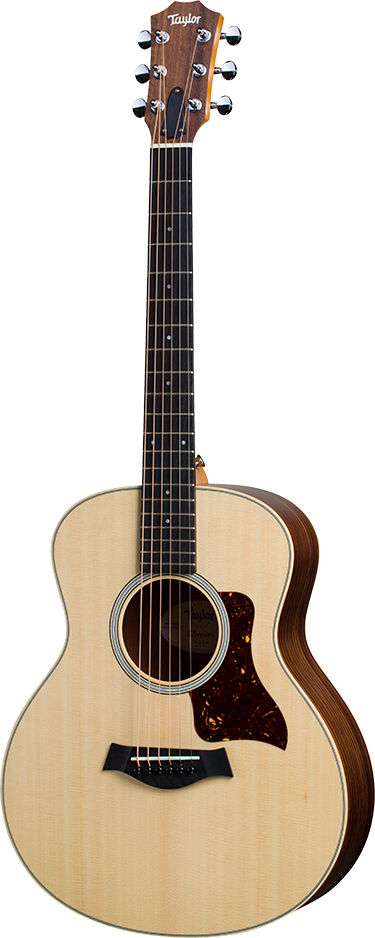
GS Mini-e Rosewood

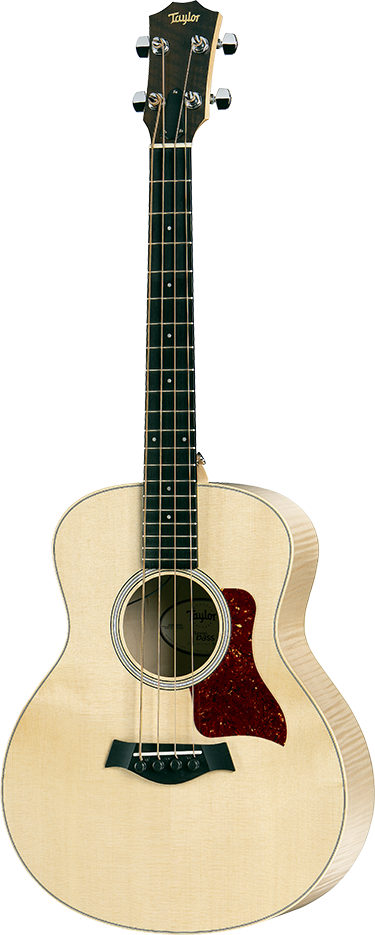
GS Mini-e Maple Bass

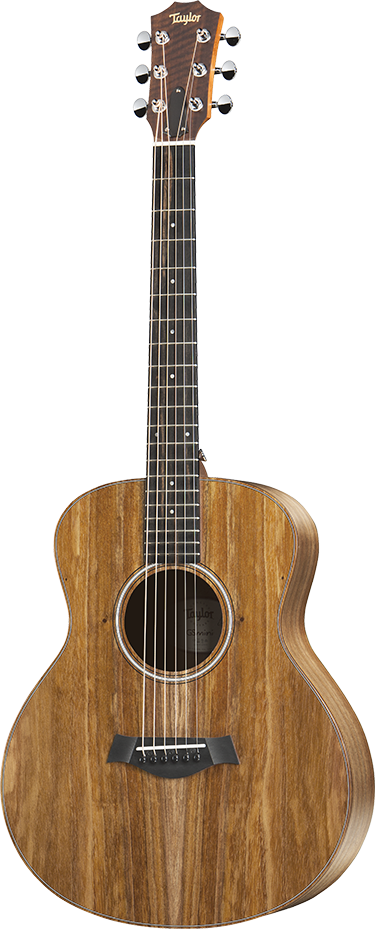
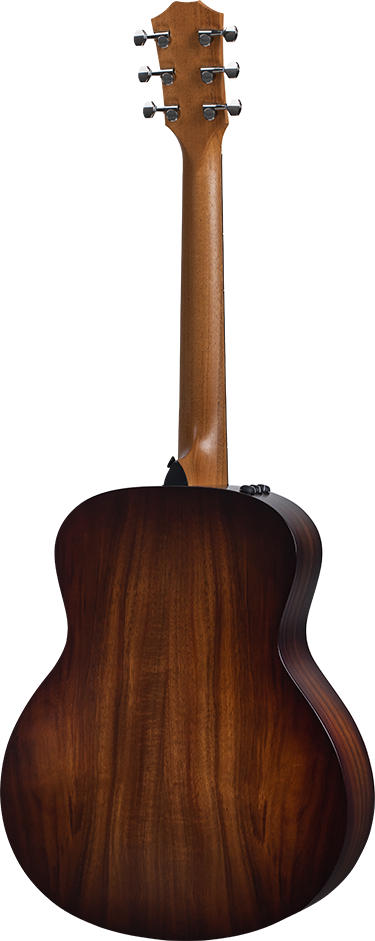
GS Mini-e Koa

GS Mini-e Koa Plus

Rewinding to its release a decade ago, Bob Taylor had a hunch the guitar would resonate with players. Having already witnessed the broad, enduring appeal of the Baby Taylor in the years following its debut in 1996, Bob saw an opportunity to leverage the company’s latest design and manufacturing capabilities and engineer a next-generation version with improved features. The goal was to give players a guitar with a more robust voice, while still preserving the playing comfort and portability of a sub-compact guitar.

After efforts to hotrod the existing Baby design failed to yield the kind of tonal enhancements Taylor’s product development team wanted, they took a different design approach. “Those initial experiments told us we needed a deeper body, a bigger top, a longer scale,” Bob remembers. 

The rest is history. Taylor’s design team eventually created a smaller version of its Grand Symphony body style (introduced in 2006), whose curves scaled down nicely, and worked out the other design features, which together brought the guitar to life in a whole new way. Despite the reduced body size, the body depth was nearly the same as a Grand Concert, and the soundhole was the same diameter as our other full-size body styles. Bob felt it was essential to incorporate Taylor’s patented neck design, which would ensure precise neck angle geometry, with a full heel, which would provide extra stability.

The hand-friendly 23-1/2-inch scale length was longer than the Baby’s (22-3/4) but shorter than the Grand Concert (24-7/8) and our other full-size steel-string models (25-1/2). Together with medium-gauge strings and the bigger body dimensions, the new guitar produced impressive volume and tonal depth for its compact form.

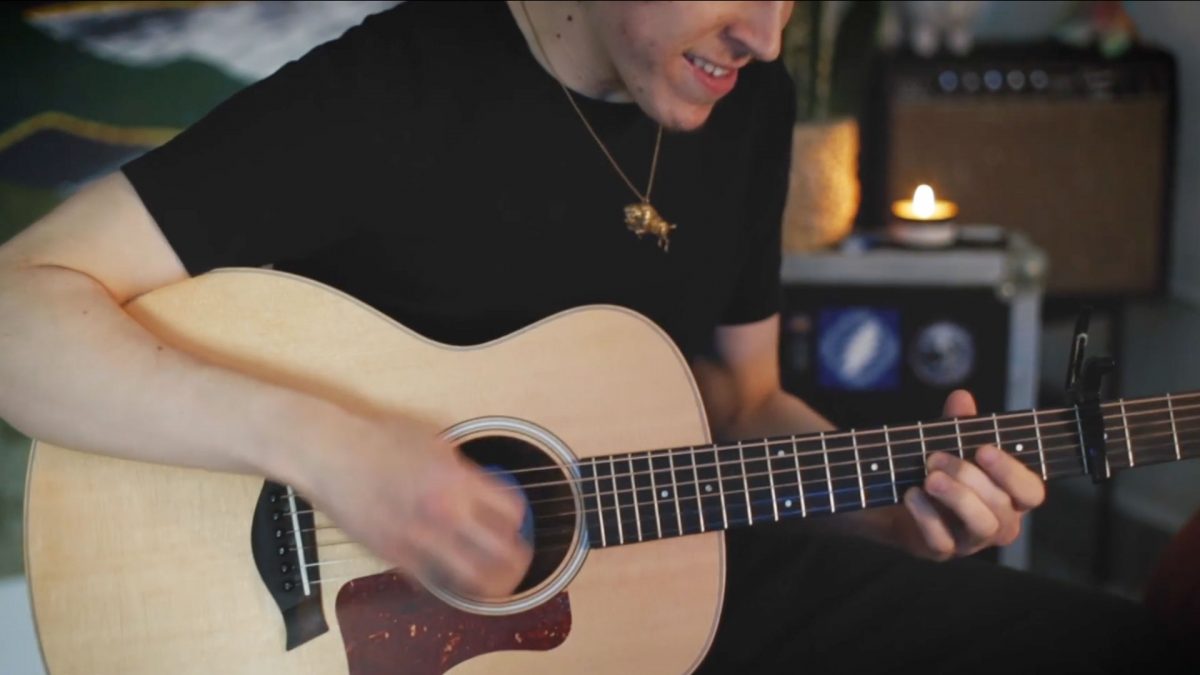
Ultimately, in the hands of players, the Mini became more than just the sum of its specs, and like other innovative Taylor designs, gave them a tool that blurred traditional boundaries. In this case, it was portable enough to travel with, yet much more than a travel guitar. It made playing guitar accessible, fun and musically satisfying for virtually anyone, from beginners to pros, kids to seniors, campers to couch potatoes. It wasn’t too precious to live life alongside you, or to pass around among friends.

Taylor master guitar designer Andy Powers, who wasn’t yet with Taylor when the Mini made its debut, recognized its musical virtues and universal appeal, dubbing it “the people’s guitar.” He later applied his own guitar magic to the instrument, using its body and scale length as the basis for a groundbreaking spinoff, the GS Mini Bass. Now a whole world of players has a couch-friendly acoustic bass to groove on as well.

Ten years in, the GS Mini has grown into a loveable family of instruments, and will no doubt continue to evolve as a staple within the Taylor line.

So if you’re a Mini owner, don’t forget to give yours a hug and a strum and do something fun to celebrate its birthday.

Birthday Wishes
For everyone from punk rockers to pro athletes, from Nashville pickers first-timers, the GS Mini is a guitar that gets along with everybody. We put the word out that the Mini was turning 10, and a few Taylor friends kindly shared a birthday message.

Song Publishing and Placement

Scroll Down

Part three of our songwriting series offers a primer on how songwriters can find markets for their music.

Each of us probably has our own clear memory of when the COVID pandemic officially flipped the switch on normal life. At Taylor, we’d been tracking its global progression like a slow-moving weather front, and on March 18, we temporarily suspended guitar production at our California campus, not knowing when we would be able to reopen.

For master builder Andy Powers, the stark, far-reaching reality of the situation hit home from another perspective when he woke up one morning around that time and scrolled through text messages from musician friends from all around the world.

“I am often surprised by how little songwriters and musicians know about the music business itself, and even less about the publishing business.”

If you are an artist/songwriter and you receive a request for a song, DO NOT promote yourself as an artist. That’s not what they asked for. Numerous publishing companies, pitching companies, and film/TV music supervisors receive thousands of songs, and they want a great song, not an artist.

If you are an artist, today’s open-mic and A&R department is called YouTube! Tens of thousands of songs and many artists have been discovered on YouTube and other similar platforms. It’s not a secret. You just have to start your own YouTube channel. Major label A&R departments, publishing companies, managers and production companies are all using online submissions to find the next star. For example, we recently discovered Filipina YouTube sensation Reneé Dominique and co-wrote her first major-label release, “Could I Love You Any More,” a duet with Jason Mraz. Dominique had nearly 100 million combined YouTube views. It works. Just do it!

If you are a songwriter, remember, you need to write daily. Keep writing songs until you write a great one. Collaborate with other writers. Even if you’re not a singer, get out and play in front of a live audience. Be a “singer/songwriter.” If you just can’t do it, then find a singer to perform your songs for you. There is no better mirror to help you see what works and what doesn’t than a live audience. Your mom and her friends and your significant other are not the best judges of your material. They can help to build your self-confidence, which is great, because you will need all you can get. But don’t mistake that for a true critical review.

Now Let’s Talk Placement  
Let’s identify some specific outlets for songs and how to best approach them.

Artist Placement
In our experience, teaming up with a charismatic artist with a lot of traction, preferably before they get signed to a label, is the best way to get your song cut and released. Do your research. Find that artist and help them develop their unique sound. Be part of their creative team and their career. Maybe your cousin knows the restaurant that the artist frequents. Use all your connections.

Production Music Library
Another way to place your songs is to write for this form of distribution. Production music, also known as stock music or library music, is a popular source for music supervisors looking for music that can be accessed easily through metadata search and quickly licensed. Some aspiring songwriters place their material in this way while they are writing their next big single. The advantage is that your music can earn money while you continue to write for yourself or other artists. The disadvantage is that you usually give up a significant percentage (or all) of your publishing and generally lose control of your materials. The contracts can be long and confusing. Get the advice of an attorney. Remember, getting your music heard and used can not only make money, but can also open doors to other opportunities. 

The Music Supervisor oversees all the creative and business aspects of the music for a project.

Film/TV/Commercials 
(Josquin Des Pres) 
Not long ago, a friend came to me with a song he had written for a popular brand of coffee. The song was good, it had a decent hook, but it had one major problem. That particular coffee company was not advertising on TV or radio, nor had they changed their jingle in decades. He made the mistake of thinking he knew what the customer wanted. Again, do your research first. Decades ago, I realized that if I wanted to enter the business of high-volume placement, writing random songs about unplanned subjects was not going to work. The best approach was to find out what the network music supervisors were looking for before writing anything. This came to fruition when I started writing for MTV reality shows and others. I would call the various music supervisors to get briefs describing the song styles they were looking for. That brief included lyric themes, tempos and the musical style of the songs. Within three days, I would deliver fully produced tracks that were written and produced to their requested specs. The result was over four hundred cues and song placements in a decade. This sort of placement volume requires discipline, quick thinking, and knowledge of every genre of current music that is out there within days after it hits the airwaves. Develop a reliable team, check your “artist” ego at the door, and be in tune with what the music supervisor is looking for, not what you think would be “more creative.”

Know the Rules
As you enter the game of film/TV placement, you’re going to have to educate yourself on the rules of the game and who the players are. I am often surprised by how little songwriters and musicians know about the music business itself, and even less about the publishing business! Remember this phrase: Preparedness plus opportunity equals success. Often songwriters have no idea what a music supervisor does, what the letters A&R stand for, or what a publishing administrator does. Let’s find out. Below is a short list with descriptions of a few terms and industry roles you should know when placing songs.

Performing Rights Organization
To receive performance royalties, you must be a songwriter, composer and/or publisher signed up with of one of the many Performing Rights Organizations (PROs) throughout the world. These royalties are collected by the PROs (BMI, ASCAP, SESAC, SOCAN, PRS, etc.) for the public performance of music (TV, films, restaurants, foreign movie theaters, etc.) and calculated and paid based on various PRO computations and other variables, such as the network on which the program is aired, the country in which a film is screened, and the number of minutes of music used. Your PRO is at least partially (and sometimes solely) determined by the country in which you are a citizen.

Music Publisher
A music publisher works with songwriters and composers to promote and market the writers’ songs/compositions. They pitch the material to the folks who use music (movie/TV producers, record labels, video games, etc.). For the purposes of copyright, a publisher is the owner of the copyrighted work. This company may also function as the Publishing Administrator, but not necessarily. It is now standard practice for songwriters of even the slightest prominence to form a publishing company as a separate legal entity to hold the rights to their work. A Music Publishing Administrator can be hired to handle your publishing, if you choose not to do it yourself.

Music Publishing Administrator
A Music Publishing Administrator is a music publishing company responsible for administering, registering and licensing compositions and collecting publishing royalties on behalf of the songwriters they represent. Under an Administration Deal, the copyright in the compositions remains with the original creators of the compositions (i.e., the songwriters). By enlisting the help of a Music Publishing Administrator, the songwriter can rest easy knowing that the business of publishing and collection of royalties is taken care of, so they can focus on creating. A typical fee for this service is 10-15 percent of the publishing portion of the income. Importantly, your writer share for performances can come directly to you from the PRO with which you are connected.  

Master Use License
Whoever owns the RECORDING of the song owns the Master License and can issue a Master Use License for placement, release, streaming, etc. There could be any number of people who recorded the song, but the only one who counts here is the one who owns the Master License. Whether it’s an independent artist’s recording of his/her own song or a major artist’s recording of a song, whoever owns the legal rights to the respective recording issues this license. This is extremely important for film/TV placement. If you have a publishing administrator, they would typically handle issuing the license.

Synchronization License (Sync License)
This means the licensing of musical works to be synchronized with moving pictures as background in a motion picture, television program, video, stream programmed, etc. “Synchronization” simply means using the composition in synchronization with the picture on screen — that’s it, nothing complicated or mysterious.

Music Supervisor
The Music Supervisor’s main duty is choosing music and licensing it for a project and making sure the music they provide to the director enhances the action/mood on screen. In other words, their job is to help the director realize his/her artistic vision through the use of music. The Music Supervisor oversees all the creative and business aspects of the music for a project. This includes helping to develop a music budget, assisting in the search for a composer (if requested), helping the director in his/her choice of songs, coordinating the soundtrack recording, “spotting sessions” (with composer and director), etc. It may or may not include doing the music clearance/music licensing paperwork, and can also include some (or all) of the duties of a Music Coordinator and/or Music Administrator. The earlier the Music Supervisor is involved, the more time they have to be creative — both with the music itself and with the budget. When a director desires a famous song or a “classic copyright” but the project’s budget does not allow for its use, the Supervisor will suggest (and often negotiate) budget-friendly alternatives from various sources, including independent artists and/or Music Libraries.

The World Is Listening
You want every chance possible to generate money from your music. While most revenue streams have diminished, there are more opportunities than ever to have your music heard on television and in movies. The entire planet is your audience. For songwriters who are also recording artists, prominent placements in TV shows and films can help expand your fan base in addition to looking great on a resume.

Remember, movies and TV shows need songs in all genres, as well as music that sounds as if it’s from various decades. It’s hard to think of any style that isn’t used in television shows and films. If the music is right, it doesn’t matter how old you are, where you live, or what you look like.

So, do your research as you refine your craft. Earn while you learn!   

Josquin Des Pres
Michael & Nancy Natter / Photo: Talitha Noel

Josquin Des Pres is a musician, songwriter, and music entrepreneur whose credits include co-writing numerous songs with Bernie Taupin (Elton John) and with songwriters Winston Sela, Michael Natter and several American Idol finalists. Des Pres has also composed songs and themes for over 40 television shows, produced more than 60 CDs for major and independent record labels, and written several books about the music industry. Michael Natter is best known for his collaboration with Grammy-winning singer-songwriter (and Taylor artist) Jason Mraz. Their hit single, “I Won’t Give Up,” is one of four co-writes from Mraz’s platinum-selling Love is a Four Letter Word album. Michael’s wife, Nancy, joined Michael to co-write the title tracks on the debut albums for X Factor winners Alex & Sierra (It’s About Us) and American Idol winner Nick Fradiani (Hurricane). The Natters teamed up again with Mraz on two cuts from his Yes! album.

New Model Showcase

Fresh Faces

Scroll Down

Three eye-catching new guitars bring more than just good looks to the Taylor line.

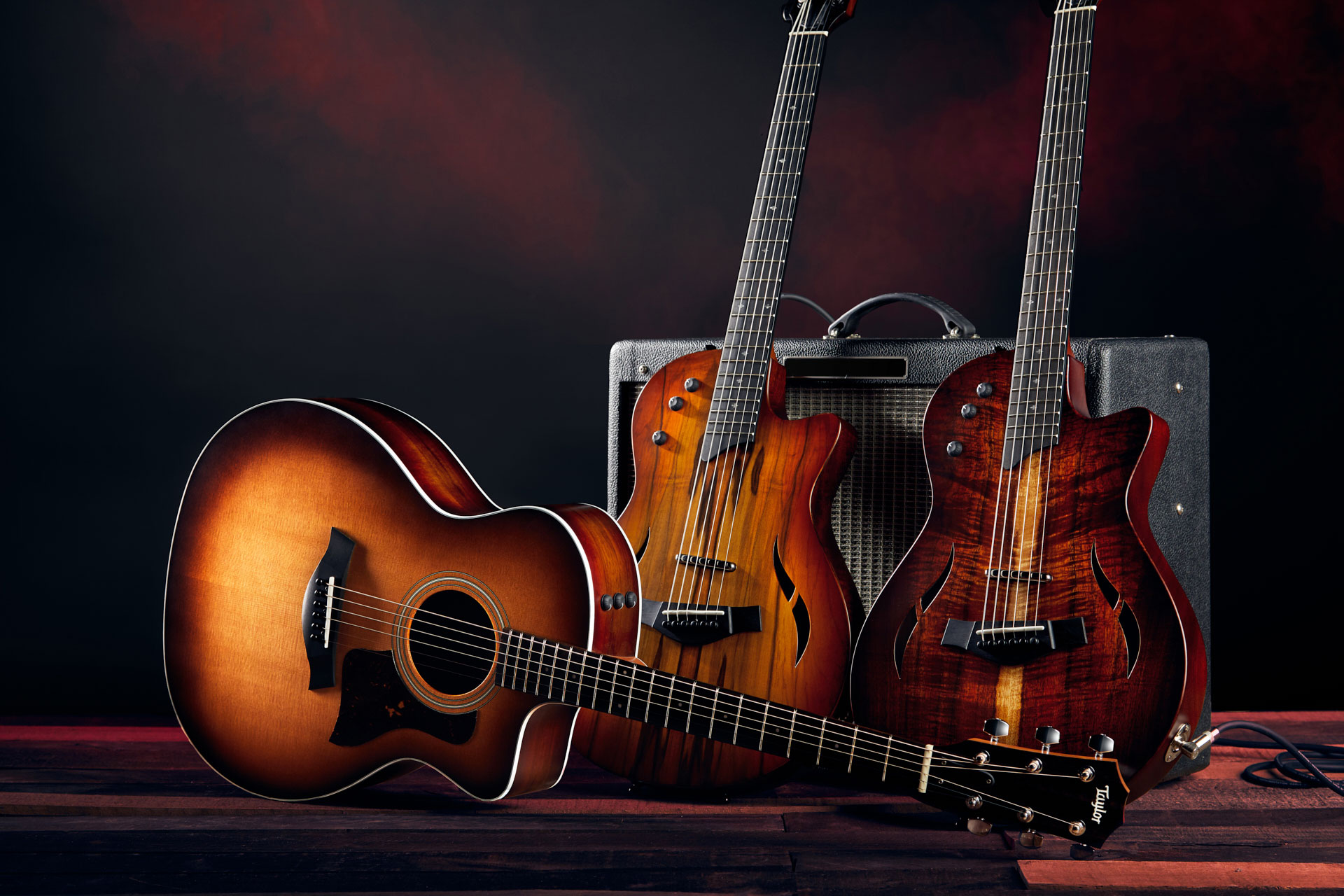
Each season brings a change of scenery, and with it comes fresh inspiration. Here at Taylor, we can’t resist a good opportunity to spice up our guitar line, whether in the form of a visually striking tonewood pairing, new aesthetic touches, or a distinctive musical voice. In this case, we’re excited to riff on a couple of models from our existing lineup and unveil three new offerings as part of a mid-year refresh: a pair of stunning exotic-top T5z Classic models and a seductive 200 Series Grand Auditorium that blends a full-body edgeburst with layered koa backand sides.

T5z Classic: Koa and Sassafras

The T5z is all about range. Our versatile hollowbody electric-acoustic combines Taylor’s proprietary acoustic and electric pickup designs with five-way switching to give players a performance or recording tool that can cover a lot of musical turf, from shimmering acoustic arpeggios to distortion-drenched electric leads. It’s a tool that speaks to the needs and preferences of contemporary players, who tend to be more omnivorous in their embrace of both acoustic and electric styles.

Where our original T5 design (introduced in 2005) straddled the amplified acoustic and electric worlds in a way that helped define the hybrid category, its successor, the T5z, leans a little more to the electric side with its smaller body, jumbo frets, and a 12-inch fretboard radius. Within the current model tiering of the T5z family (Custom, Pro, Standard, Classic and Classic Deluxe), models featuring tops with more exotic visual flair — figured koa, cocobolo and figured maple — are typically reserved for the premium Custom and Pro models, while the Classic editions sport a mahogany top and minimal detailing.

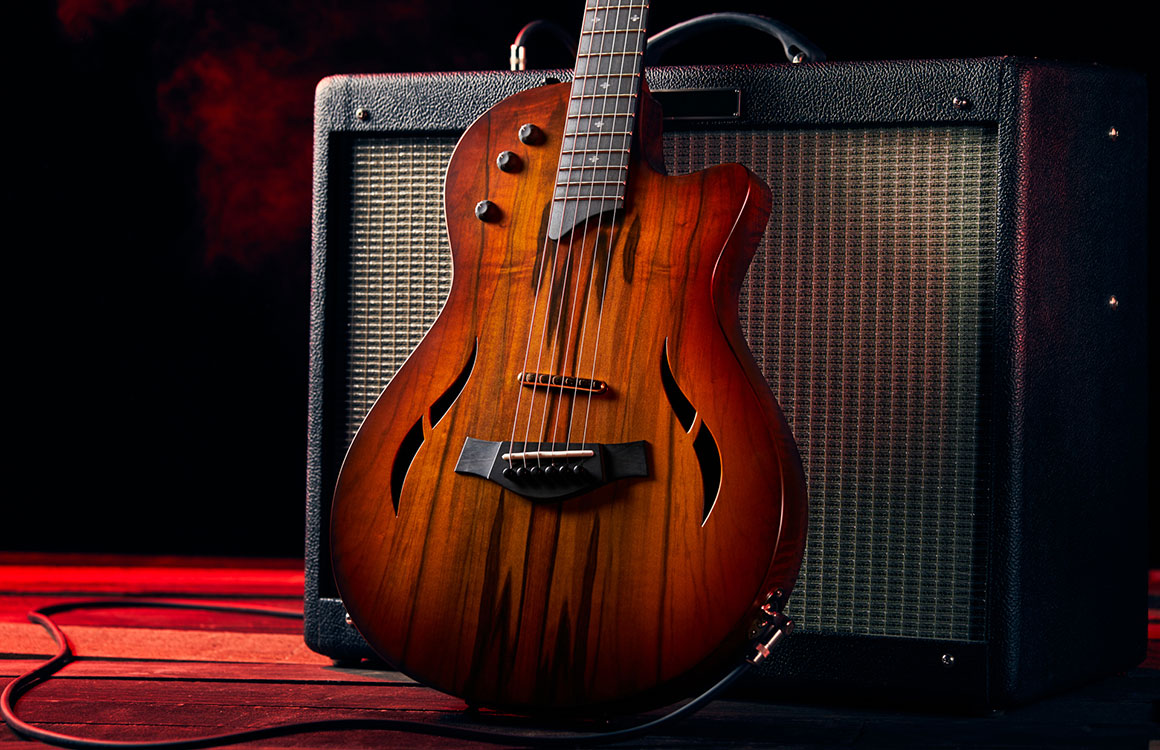
This year, we’ve kicked up the swagger a notch on the Classic with two glorious new top options: luscious Hawaiian koa and richly grained blackheart sassafras. Both models are adorned with a shaded edgeburst top treatment that subtly enhances the natural character of these respective woods. Aesthetically, these models otherwise retain the woody, workmanlike vibe of the T5z Classic family, with a muted satin finish and an unbound body and F-holes, in this case letting the beauty of the top wood take center stage. Italian acrylic Small Diamond fretboard inlays and satin black tuners complete the look. Both models feature our standard T5z electronics and ship in a Taylor deluxe hardshell case.

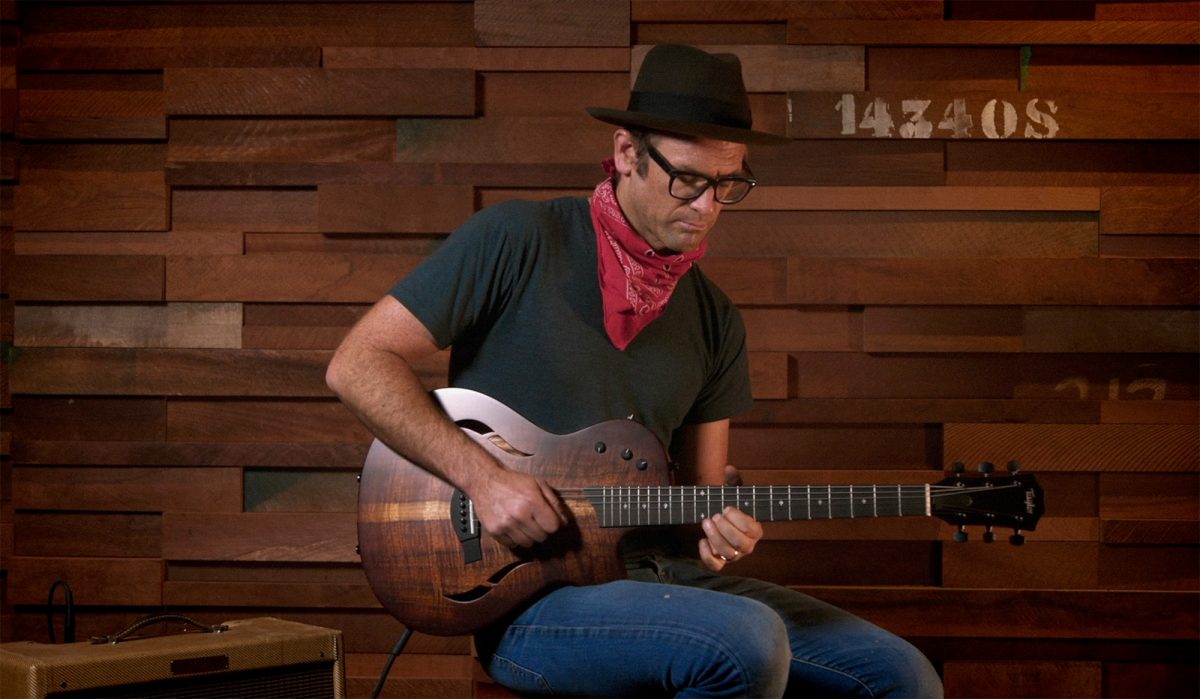
Watch Taylor master guitar designer Andy Powers sample the new T5z Classic Koa.

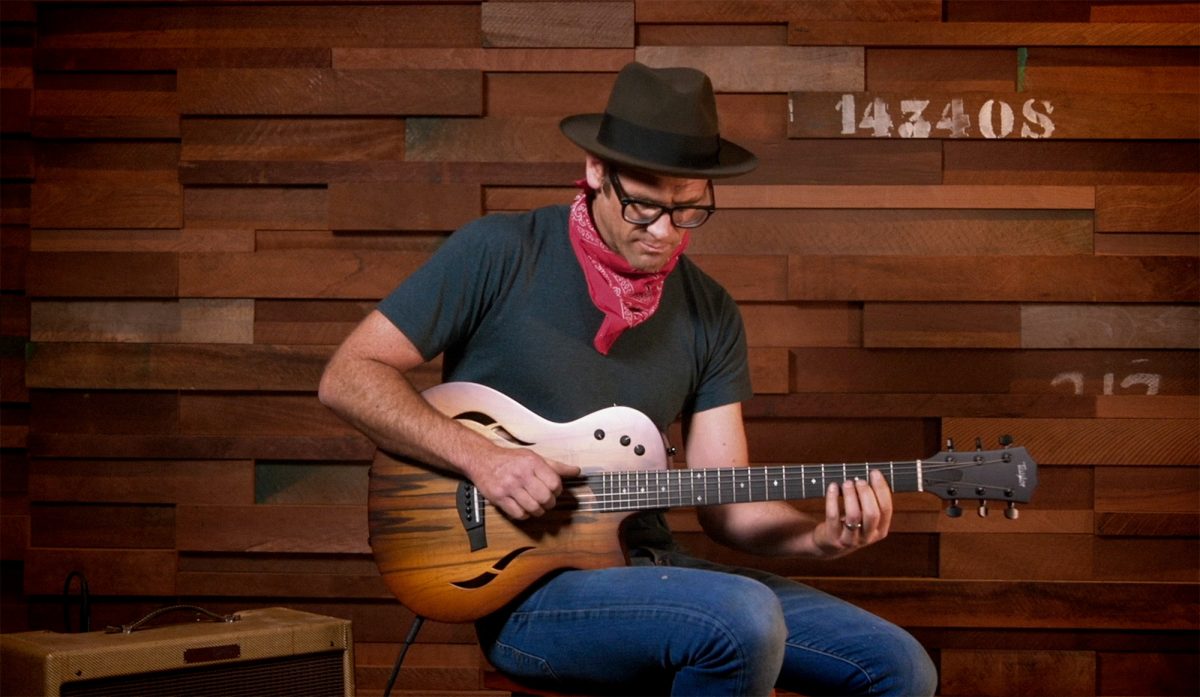
Watch Taylor master guitar designer Andy Powers sample the sassafras model.

T5z Pickup Switching

The T5z features a three-pickup configuration: a concealed neck humbucker (located under the fingerboard at the last fret), a visible bridge humbucker, and a magnetic acoustic body sensor located inside the body. Five-way switching puts an array of sounds at your fingertips. Here’s what you can get out of each setting.

T5z Demo
Taylor’s Andy Lund demonstrates how the T5z’s five-way switching taps into a rich palette of amplified acoustic and electric tones.

Position 1: Neck humbucker and body sensor

With the switch turned all the way toward the neck, you’ll find the cleanest, most acoustic voice the T5z can produce. If you dig in, the acoustic body sensor will respond with extra snap and sizzle.

Position 2: Neck humbucker

Isolating the neck humbucker will round off your tone and lend it a warmer, darker sonic hue. Make it even jazzier by rolling back off the treble.

Position 3: Bridge humbucker

Here’s your most versatile option, a powerful electric pickup that can produce clean, bright, familiar electric tones and high-octane leads with just a bit of tweaking from the player. Switch positions 3-5 all respond well to the addition of your favorite overdrive or distortion pedals if extra horsepower is needed.

Pro Tip: For high-gain sounds, try turning the bass and treble controls completely off. Doing so will push the mid frequencies forward, resulting in a sound that will sit well with the band, or in the mix. From there, you can add bass and treble as needed to further dial in your sound.

Position 4: Neck and bridge humbuckers in parallel

This setting can cover everything from ’50s hollowbody big-band tones to edgy surf-rock sounds, especially if you add a touch of reverb or a chorus pedal.

Position 5: Neck and bridge humbuckers in series 

Round it out with the fattest selection, a meaty, powerful tone that might conjure images of big stages and stacks of speaker cabinets. Rolling off the volume here also creates a moody, contemplative sound to explore.

200 Series: 214ce-K SB

Body Shape: Cutaway Grand Auditorium
Back/Sides: Layered Hawaiian Koa
Top: Solid Sitka Spruce

At the acoustic end of the spectrum, we tapped our 200 Series, specifically our 214ce-K, and gave it an aesthetic upgrade with an artfully applied shaded edgeburst that wraps around the top, back and sides. Together with the guitar’s matte finish, the burst treatment casts a mellow, rootsy vintage sheen. 

Musically, the pairing of solid Sitka spruce and layered Hawaiian koa, together with our versatile Grand Auditorium body, delivers a smooth blend of signature Taylor clarity, power and balance across the tonal spectrum. Players will love how responsive the guitar is to a dynamic touch and how adaptable it is across genres and styles. 

Fans of a slender neck will appreciate the combination of our slim profile with a nut width of 1-11/16 inches — comfortable enough for fingerstyle arrangements, chords or flatpicked leads. Other 200 Series appointments include a three-ring rosette, 4mm dot fretboard inlays in Italian acrylic, a faux tortoiseshell pickguard, and crisp white binding that pops against the dark hues of the edgeburst. Onboard ES2 electronics and a sturdy yet lightweight hardshell gig bag seal the deal on what promises to be a reliable gigging partner, with heart, style and utility to spare.